No items found.
No items found.
eBook
eBook

The Ugly Truth About DIY Feature Flag Tools | Harness Resource

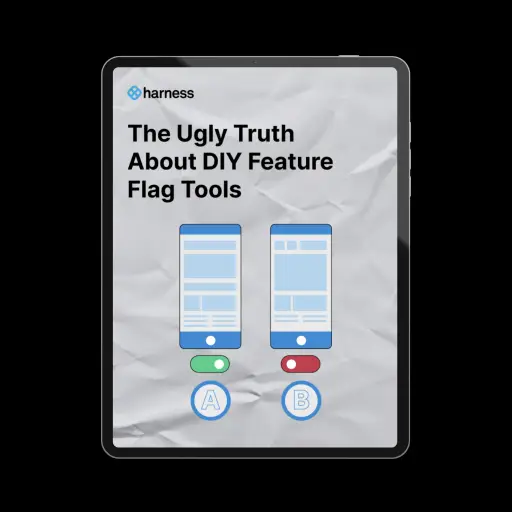
DIY feature flag development often begins with a deceptively simple premise: “It’s just a toggle - how hard could it be?” This common misconception has led countless engineering teams down a path that ultimately results in significant technical debt, resource drain, and operational issues.

However, this initial optimism rarely accounts for the true scope and complexity of modern feature management requirements. Enterprise environments painfully expose the limitations of DIY feature flag solutions. This playbook is designed to help teams course correct toward a more professional, feature management solution.

Published
January 1, 2024

Guide on its way

Check your inbox — your playbook is ready.

You're all set

Check your inbox — your download is on the way.

Redirect link
No items found.
Redirect link

What you'll learn

Key Takeaways

DIY Feature Flags Create Hidden Technical Debt

What begins as a simple toggle often evolves into a complex system requiring constant maintenance. Ongoing support can consume up to 30 percent of multiple engineers' time, diverting focus from core products.

Homegrown Tools Introduce Severe Security Risks

In-house solutions frequently lack the rigorous security controls needed to protect personally identifiable information. This exposes organizations to potential data breaches and makes compliance with regulations like GDPR and HIPAA difficult.

DIY Systems Struggle With Production Scale

Evaluating multiple feature flags under high production loads creates significant performance bottlenecks. Custom implementations often fail to handle distributed systems challenges, resulting in increased latency and inconsistent user experiences.

Reliable Analytics Require Enterprise Frameworks

Building statistically sound testing and data collection systems is highly complex. Enterprise platforms automatically handle user attribution and edge cases that often invalidate results in custom-built solutions.

Enterprise Requirements Exceed DIY Capabilities

Despite many engineering teams building their own solutions, DIY tools cannot easily support enterprise needs. Advanced requirements like role-based access control and cross-team coordination necessitate a professional platform.