Careers in India
Build the future of software delivery from India
Join the Harness India engineering teams building and owning key components of the platform used by customers around the world.
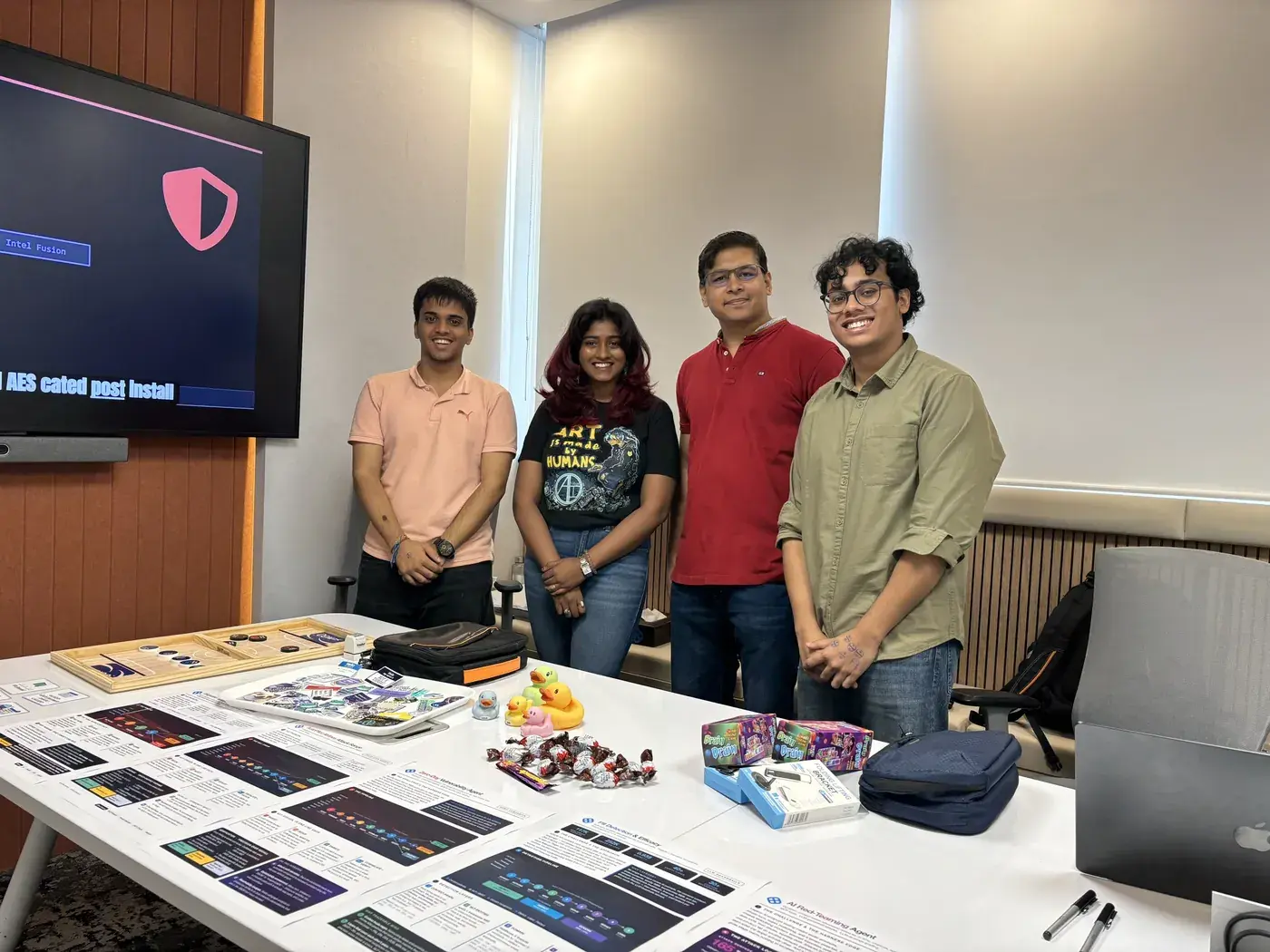
Careers in India
Join the Harness India engineering teams building and owning key components of the platform used by customers around the world.
About Harness
Across engineering teams, only 30–40% of effort goes into writing code, while 60–70% happens after code in testing, deployment, security, compliance, and managing infrastructure.
Harness is built for this part of the lifecycle, helping engineering teams deliver software faster while maintaining reliability, security, and control.
The company was founded in 2017 by Jyoti Bansal, who previously built AppDynamics, later acquired by Cisco for $3.7B.
Today Harness is trusted by 1,000+ enterprise engineering teams and has grown into a 1,200+ person global organisation across 14 offices worldwide. Harness India plays a critical role in building the platform, with engineering teams owning key components used by customers around the world.
Engineering at Harness is focused on solving the large-scale software delivery, infrastructure, and security challenges that modern engineering teams face every day. As AI reshapes the software development lifecycle, teams are building agentic AI capabilities and autonomous systems across testing, deployment, security, and operations that act on real-time context, reduce manual effort, and enable faster, more reliable decisions at scale.
Building the platform that Fortune 500 engineering teams rely on to build, secure, deploy, and operate software across highly complex environments.
The AI Platform, Unified Data Platform, Data Lake, core services, and knowledge graph power 20+ product modules across thousands of customer environments, and must stay reliable, performant, and secure.
Deeply hands-on, collaborative, and learning-driven, with a startup-within-a-startup mindset: owning product areas end-to-end, working closely with customers, and deciding close to the problem.
There is also a strong culture of contributing back to the broader engineering community
through open-source projects and conference participation.
Harness is building the platform for the autonomous software development lifecycle. As AI changes how code is written, our engineering teams are building the systems that help developers and AI agents safely take that code from commit to production.
Teams in India contribute across the Harness platform, including:
Building the systems and agents that automate how software moves from commit to production across builds, testing, deployments, infrastructure, and release workflows.
Building AI-powered security capabilities that identify vulnerabilities, software supply-chain risks, and resilience issues before they reach production.
Protecting applications, APIs, and AI systems once they're running in production, with continuous visibility and controls around emerging risks.
Building systems that give engineering and finance teams visibility and control over cloud and AI costs, helping organisations scale without losing sight of efficiency.
Explore how organisations use Harness to improve delivery speed, reliability, and infrastructure efficiency in our customer case studies.
Our interview process is designed to understand how you approach engineering problems, collaborate with others, and learn from real-world experience.
Beyond evaluation, these multi-round interviews also offer an opportunity for you to understand our engineering culture, the kinds of problems we work on, and whether Harness is the right place for you to grow. We encourage candidates to ask questions and use these conversations to learn more about our teams and the work we do.
Across these conversations, we typically look for strong engineering fundamentals, clear problem-solving ability, thoughtful system design, effective collaboration and communication, and a genuine curiosity to learn.
While the exact sequence may vary depending on the role and level, the process includes a set of discussions that explore different aspects of your technical thinking, experience, and approach to building systems.
Engineering work at Harness is collaborative and systems-focused.
A typical day might include:
Working with engineers and product managers to design new capabilities in the platform.
Reviewing system designs to ensure they scale reliably and remain maintainable over time.
Implementing capabilities across CI pipelines, deployment systems, security tooling, or reliability platforms.
Investigating issues across distributed services and delivery infrastructure.
Engaging with product teams and customers to understand real delivery challenges firsthand, using those insights to shape the roadmap and build solutions that solve real problems.
Sharing progress, launches, and learnings as new capabilities reach production and create impact for users.
Deploying changes using the same platform used by customers around the world.