Leverage Cloud Asset Governance to help you take your cloud governance to the next level.

TL;DR
- Cloud Custodian provides comprehensive cloud governance and policy-as-code capabilities but requires you to manage infrastructure, write YAML policies, and handle operational complexity when running at scale.
- Harness Cloud Asset Governance extends Cloud Custodian with a fully managed execution engine, eliminating the need to provision, maintain, or scale your own infrastructure.
- AIDA (AI Development Assistant) enables teams to create governance policies using natural language instead of learning YAML syntax, accelerating policy authoring and reducing the expertise barrier.
- Enterprise features including GUI-based policy management, role-based access control, audit trails, and centralized reporting make cloud governance accessible to non-technical stakeholders and improve compliance visibility across the organization.
What is Cloud Custodian?
Cloud custodian is a widely used open-source cloud management tool backed by CNCF which helps organizations enforce policies and automate actions to enable them achieve a well maintained cloud environment. It operates on the principles of declarative YAML based policies. With support for multiple cloud providers, including AWS, Azure, and Google Cloud, Cloud Custodian enables users to maintain consistent policies and governance practices across diverse cloud environments, making it particularly appealing for organizations embracing a multi-cloud strategy.
Cloud Custodian comes with all the goodness of battle testing by the community & detects and auto remediates issues - it does come with its own set of challenges. Let’s dive into what are the key challenges that organizations run into when leveraging Cloud Custodian at scale to manage their assets.
Challenges with Cloud Custodian
- No GUI: It’s a CLI driven tool only, requiring knowledge of how to create and edit YAML files in the correct syntax.
- Scale: Scaling cloud custodian requires a dedicated team looking into the operational aspects of the infrastructure.
- No Reporting: Without a GUI, there’s not way to provide for centralized visibility of rules and enforcement across stakeholders
- No Security/Governance: There is no ability to apply RBAC, or have audit trails for changes made.
- Operational Overhead: As with any open source tool, it requires ongoing maintenance, high management overhead, and needs dedicated infrastructure provisioned
- Complex Policies: No ability to provide guidance on rules, or smart policy authoring that allows user to create rules using natural language
How is Harness Cloud Asset Governance different?
Harness Cloud Asset Governance leverages all of the goodness of Cloud Custodian, such as its comprehensive coverage of governance policy support across cloud providers, while solving for all the challenges that comes with self-hosting Cloud Custodian.
Harness provides a rich set of preconfigured governance-as-code rules that make it easy to implement out of the box. But who doesn’t like customization & how do we solve it?
We leverage our AI Development Assistant (AIDA™) to power Cloud Asset Governance with a natural language interface that eliminates the need to understand YAML syntax to author policies.

Harness Cloud Asset Governance serves as a fully managed and scalable rule execution engine. This allows you to concentrate on establishing guardrails, while Harness takes care of the intricacies of management overhead. In addition, Cloud Asset Governance provides detailed Role-Based Access Control and Audit trails. This feature empowers you to precisely assign access permissions, determining who has the authority to execute specific policies and in which cloud accounts.
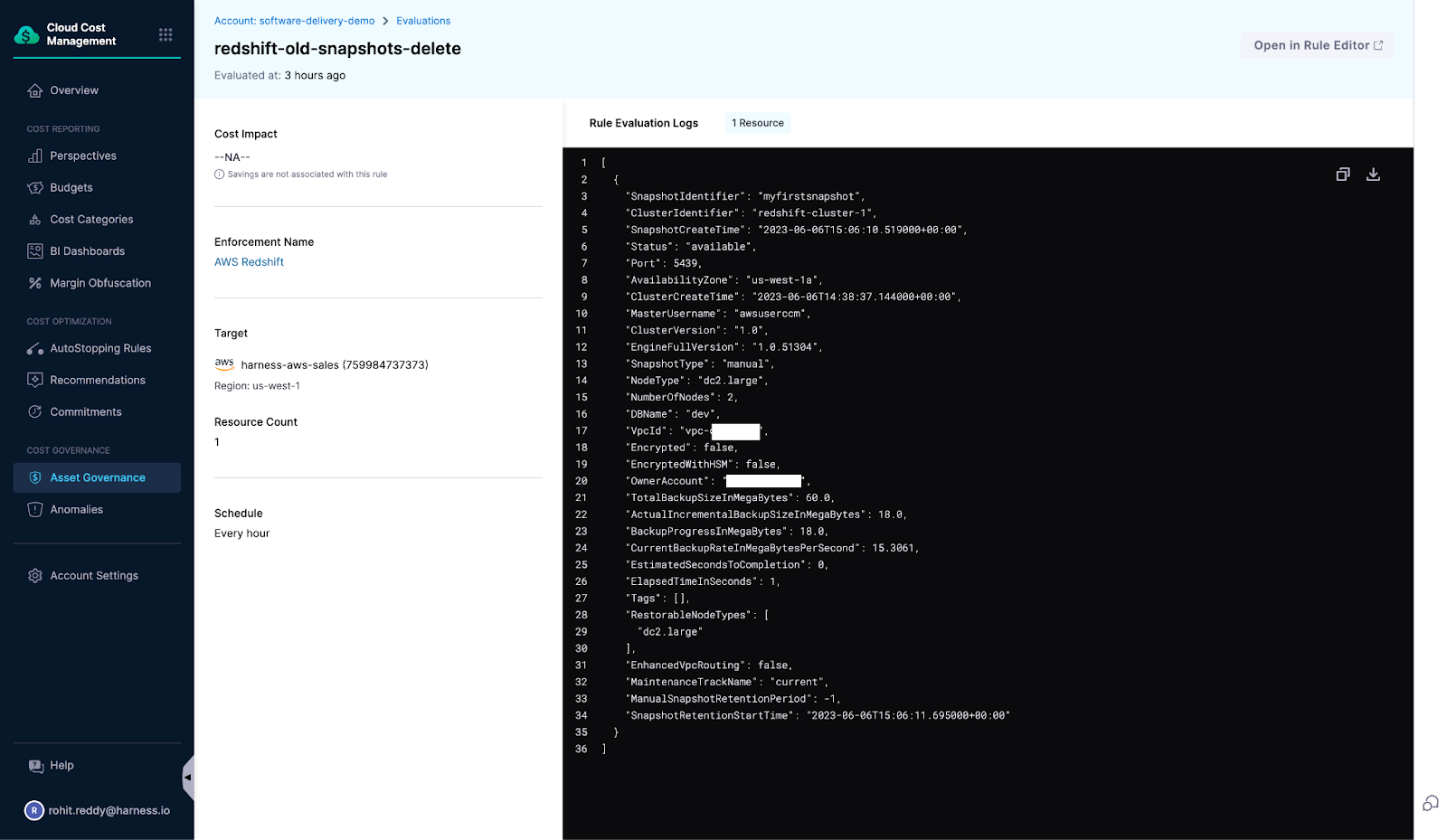
Moreover, Harness includes a user-friendly visual interface, minimizing friction and improving the usability of utilizing Cloud Custodian. This interface streamlines the process of reviewing policy evaluations at any given point in history and provides a clear view of the outcomes of those evaluations.
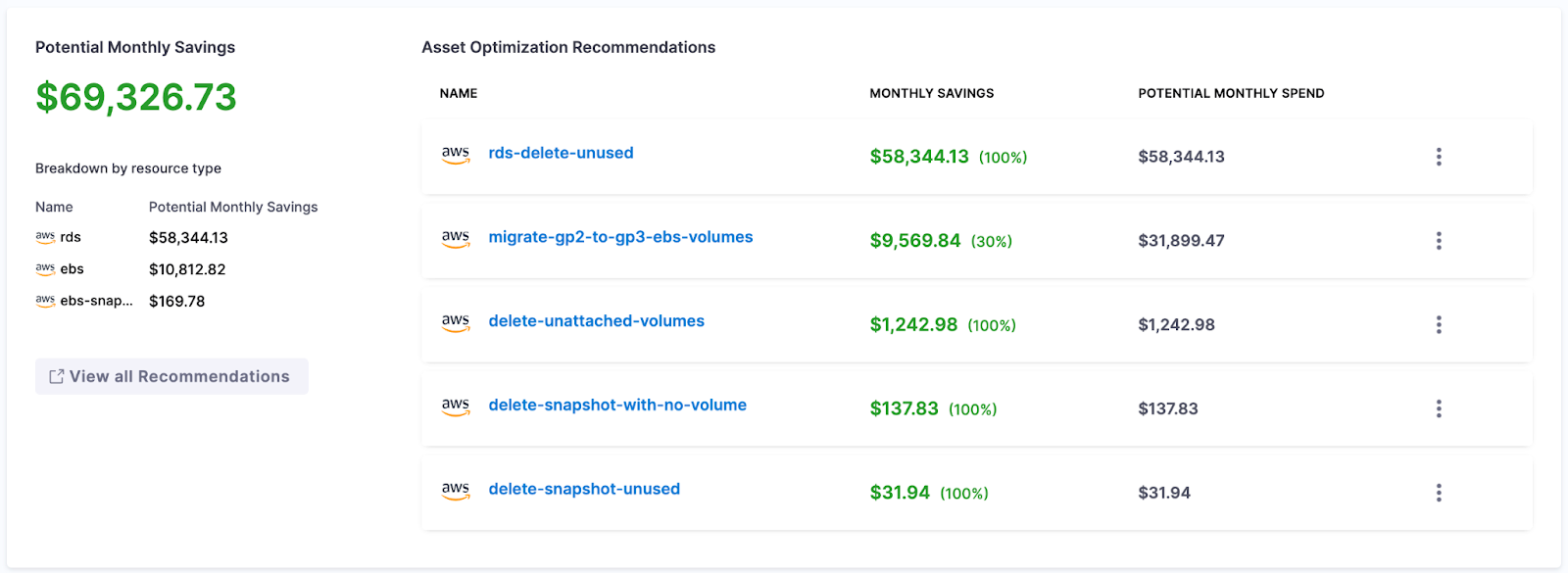
At times, determining what to execute and understanding how to save costs through policy guardrails can be challenging. Even with contextual knowledge, the question remains: how do we disseminate this understanding throughout the entire team? This is where Out-of-the-Box Recommendations come into play. We conduct policy assessments in the background to pinpoint cost-saving opportunities and present them through the visual interface.
In summary, while Cloud Custodian offers robust cloud management capabilities, it comes with notable challenges, including the absence of a graphical interface, scalability issues, and limitations in reporting and security features. Harness Cloud Asset Governance steps in as a strategic enhancement, retaining the strengths of Cloud Custodian while mitigating its drawbacks.
Harness introduces preconfigured governance-as-code rules, simplifying policy implementation, and distinguishes itself through the integration of AI Development Assistant (AIDA™) for a natural language interface during policy authoring. With a fully managed and scalable rule execution engine, Harness ensures organizations can establish effective guardrails without grappling with operational complexities. The platform's user-friendly visual interface, Role-Based Access Control, and detailed Audit trails contribute to a seamless and efficient governance experience, providing centralized visibility and precise access management. By choosing Harness Cloud Asset Governance, organizations can optimize their cloud governance, overcoming the challenges associated with self-hosting Cloud Custodian while enjoying enhanced customization and usability.
What’s Next?
Transform your path to a well managed cloud with Governance-as-code and try Harness Cloud Asset Governance now to receive automatic recommendations that can save you money, improve compliance, and reduce security risks. Book a demo to learn more!

FAQ
What is Cloud Asset Governance?
Cloud Asset Governance is the practice of using policy-as-code to automatically enforce security, compliance, and cost optimization rules across cloud resources. It detects policy violations, generates reports, and can auto-remediate issues like untagged resources, overly permissive security groups, or orphaned volumes. Harness Cloud Asset Governance provides a managed, AI-powered platform for implementing governance-as-code at enterprise scale across AWS, Azure, and Google Cloud.
How is Harness Cloud Asset Governance different from Cloud Custodian?
Harness Cloud Asset Governance is built on Cloud Custodian but adds a managed execution engine, so you do not need to provision or maintain infrastructure. It includes a GUI for policy management, AI-powered natural language policy authoring via AIDA, role-based access control, audit trails, and centralized reporting across cloud accounts. While Cloud Custodian is CLI-only and requires YAML expertise, Harness makes cloud governance accessible to both technical and non-technical users.
What are the main challenges with self-hosting Cloud Custodian?
Self-hosting Cloud Custodian requires dedicated infrastructure for execution, ongoing maintenance, and expertise in YAML policy syntax. There is no graphical interface, making it difficult to provide centralized visibility or stakeholder reporting. It also lacks built-in RBAC and audit trails, limiting your ability to control who can execute policies or track changes. At scale, the operational overhead of managing execution scheduling, infrastructure, and troubleshooting becomes a significant burden for platform teams.
Does Harness Cloud Asset Governance support multi-cloud environments?
Yes. Harness Cloud Asset Governance supports AWS, Azure, and Google Cloud Platform, inheriting Cloud Custodian's comprehensive multi-cloud resource coverage. You can define and enforce consistent governance policies across all three cloud providers from a single platform, with centralized visibility, unified reporting, and cross-cloud policy enforcement.
Can I create policies without knowing YAML?
Yes. Harness Cloud Asset Governance includes AIDA (AI Development Assistant), which allows you to author policies using natural language. You describe what you want the policy to do in plain English (for example, "find all EC2 instances without tags and stop them"), and AIDA generates the corresponding Cloud Custodian YAML. This eliminates the need to learn YAML syntax and accelerates policy creation for teams without deep Cloud Custodian expertise.