Harness IDP Environment Management brings full lifecycle control to environments with native CD and IaCM integration.

TL;DR
Software delivery may be fast, but environments have been holding teams back with manual work and constant friction. Harness changes that by turning environments into instant, self-service systems that are automated, consistent, and fully governed. Teams can move quickly, stay in control, and finally eliminate the chaos that used to slow them down.
We’ve come a long way in how we build and deliver software. Continuous Integration (CI) is automated, Continuous Delivery (CD) is fast, and teams can ship code quickly and often. But environments are still messy.
Shared staging systems break when too many teams deploy at once, while developers wait on infrastructure changes. Test environments get created and forgotten, but over time, what is running in the cloud stops matching what was written in code.
We have made deployments smooth and reliable, but managing environments still feels manual and unpredictable. That gap has quietly become one of the biggest slowdowns in modern software delivery.
This is the hidden bottleneck in platform engineering, and it's a challenge enterprise teams are actively working to solve.
As Steve Day, Enterprise Technology Executive at National Australia Bank, shared:
“As we’ve scaled our engineering focus, removing friction has been critical to delivering better outcomes for our customers and colleagues. Partnering with Harness has helped us give teams self-service access to environments directly within their workflow, so they can move faster and innovate safely, while still meeting the security and governance expectations of a regulated bank.”
At Harness, Environment Management is a first-class capability inside our Internal Developer Portal. It transforms environments from manual, ticket-driven assets into governed, automated systems that are fully integrated with Harness Continuous Delivery and Infrastructure as Code Management (IaCM).
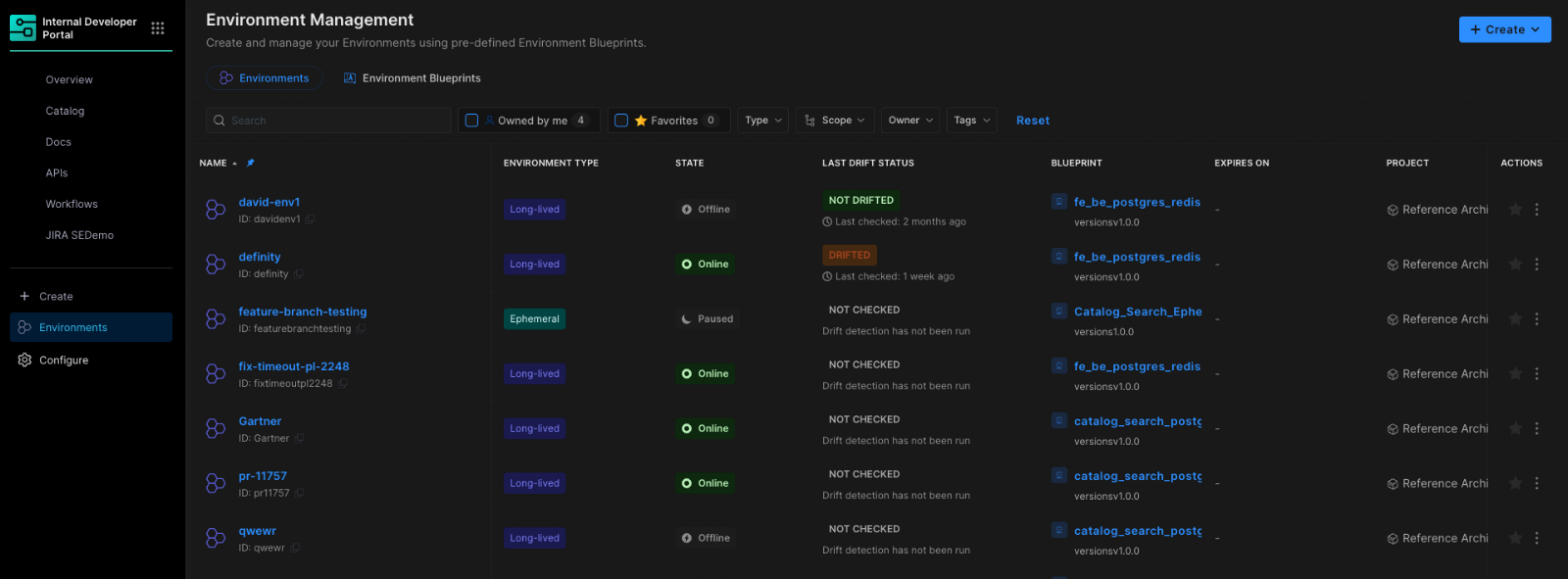
This is not another self-service workflow. It is environment lifecycle management built directly into the delivery platform.
The result is faster delivery, stronger governance, and lower operational overhead without forcing teams to choose between speed and control.
Closing the Gap Between CD and IaC
Continuous Delivery answers how code gets deployed. Infrastructure as Code defines what infrastructure should look like. But the lifecycle of environments has often lived between the two.
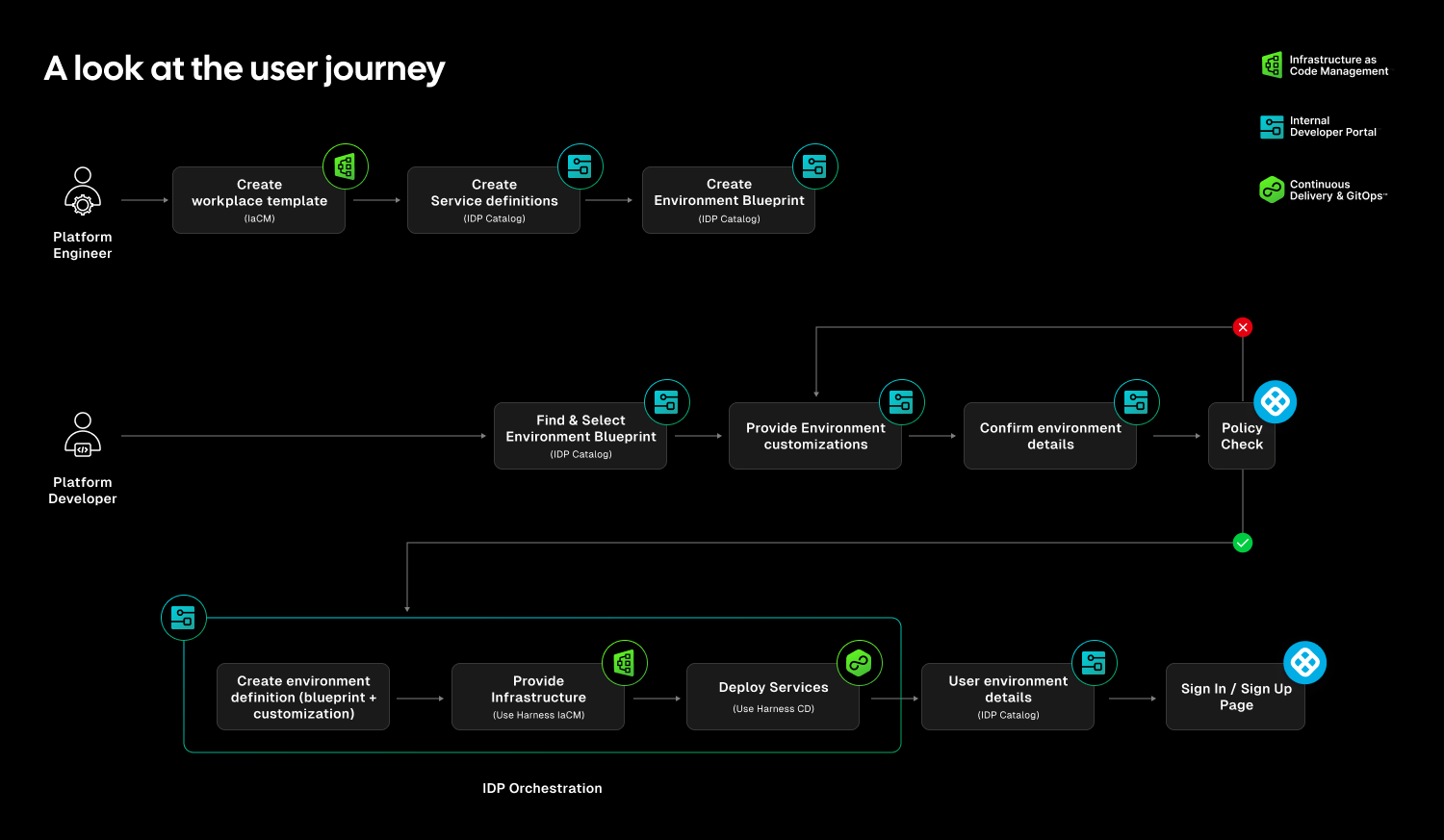
Teams stitch together Terraform projects, custom scripts, ticket queues, and informal processes just to create and update environments. Day two operations such as resizing infrastructure, adding services, or modifying dependencies require manual coordination. Ephemeral environments multiply without cleanup. Drift accumulates unnoticed.
The outcome is familiar: slower innovation, rising cloud spend, and increased operational risk.
Environment Management closes this gap by making environments real entities within the Harness platform. Provisioning, deployment, governance, and visibility now operate within a single control plane.
Harness is the only platform that unifies environment lifecycle management, infrastructure provisioning, and application delivery under one governed system.
Blueprint-Driven by Design
At the center of Environment Management are Environment Blueprints.
Platform teams define reusable, standardized templates that describe exactly what an environment contains. A blueprint includes infrastructure resources, application services, dependencies, and configurable inputs such as versions or replica counts. Role-based access control and versioning are embedded directly into the definition.
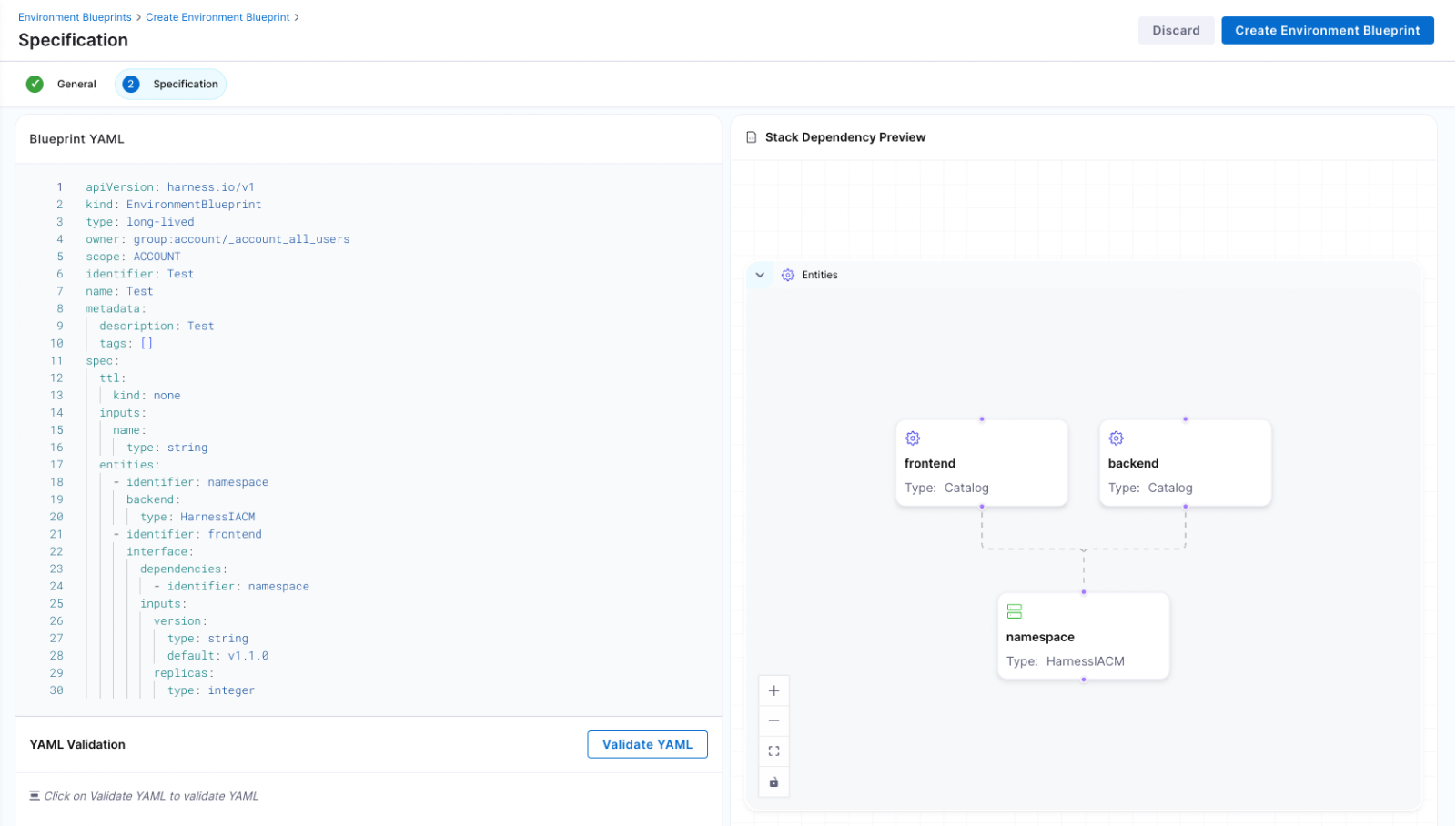
Developers consume these blueprints from the Internal Developer Portal and create production-like environments in minutes. No tickets. No manual stitching between infrastructure and pipelines. No bypassing governance to move faster.
Consistency becomes the default. Governance is built in from the start.
Full Lifecycle Control
Environment Management handles more than initial provisioning.
Infrastructure is provisioned through Harness IaCM. Services are deployed through Harness CD. Updates, modifications, and teardown actions are versioned, auditable, and governed within the same system.
Teams can define time-to-live policies for ephemeral environments so they are automatically destroyed when no longer needed. This reduces environment sprawl and controls cloud costs without slowing experimentation.
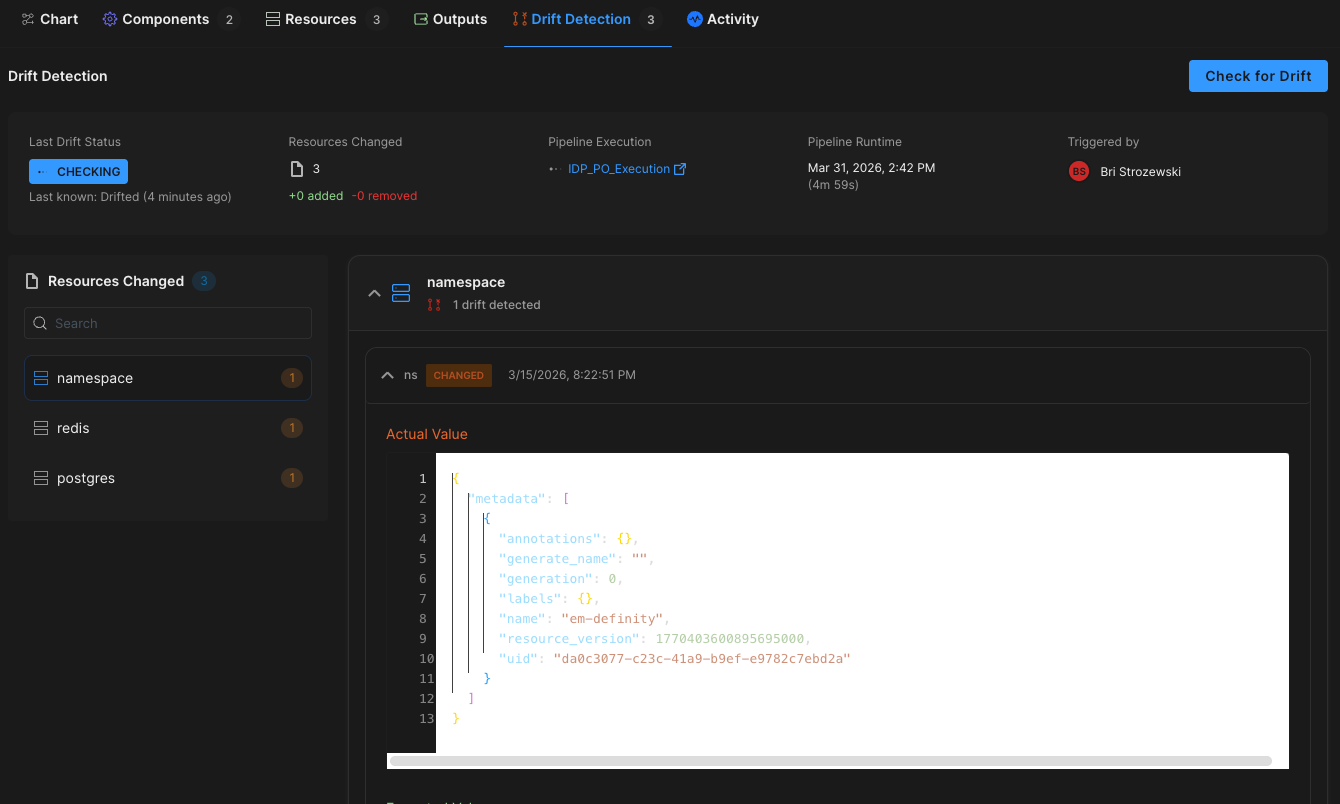
Harness EM also introduces drift detection. As environments evolve, unintended changes can occur outside declared infrastructure definitions. Drift detection provides visibility into differences between the blueprint and the running environment, allowing teams to detect issues early and respond appropriately. In regulated industries, this visibility is essential for auditability and compliance.
Governance Built In
For enterprises operating at scale, self-service without control is not viable.
Environment Management leverages Harness’s existing project and organization hierarchy, role-based access control, and policy framework. Platform teams can control who creates environments, which blueprints are available to which teams, and what approvals are required for changes. Every lifecycle action is captured in an audit trail.
This balance between autonomy and oversight is critical. Environment Management delivers that balance. Developers gain speed and independence, while enterprises maintain the governance they require.
"Our goal is to make environment creation a simple, single action for developers so they don't have to worry about underlying parameters or pipelines. By moving away from spinning up individual services and using standardized blueprints to orchestrate complete, production-like environments, we remove significant manual effort while ensuring teams only have control over the environments they own."
— Dinesh Lakkaraju, Senior Principal Software Engineer, Boomi
From Portal to Platform
Environment Management represents a shift in how internal developer platforms are built.
Instead of focusing solely on discoverability or one-off self-service actions, it brings lifecycle control, cost governance, and compliance directly into the developer workflow.
Developers can create environments confidently. Platform engineers can encode standards once and reuse them everywhere. Engineering leaders gain visibility into cost, drift, and deployment velocity across the organization.
Environment sprawl and ticket-driven provisioning do not have to be the norm. With Environment Management, environments become governed systems, not manual processes. And with CD, IaCM, and IDP working together, Harness is turning environment control into a core platform capability instead of an afterthought.
This is what real environment management should look like.