Modernize artifact management with built-in security and governance. Secure dependencies at ingest and scale software delivery with confidence.

From Artifact Storage to Supply Chain Control: Rethinking Artifact Management with Harness
Harness Artifact Registry marks an important milestone as it evolves from universal artifact management into an active control point for the software supply chain. With growing enterprise adoption and new security and governance capabilities, Artifact Registry is helping teams block risky dependencies before they reach the pipeline, reduce supply chain exposure, and scale artifact management without slowing developers down.
In little over a year, Harness Artifact Registry has grown from early discovery to strong enterprise adoption, supporting a wide range of artifact formats, enterprise-scale storage, and high-throughput CI/CD pipelines across both customers and internal teams. What started as a focused initiative inside Harness has evolved into a startup within a startup, quickly becoming a core pillar of the Harness platform.
Today, we’re sharing how Artifact Registry is helping organizations scale software delivery by simplifying artifact management, strengthening supply chain security, and improving developer experience and where we’re headed next.
Building a Modernized, Cloud Native Artifact Management
In customer conversations, one theme came up repeatedly: as organizations scale CI/CD, artifacts multiply fast. Containers, packages, binaries, Helm charts, and more end up spreading across fragmented tools with inconsistent controls. Teams don't want just another registry. They want one trusted system, deeply integrated with CI/CD, that can scale globally and enforce policy by default. That's exactly what the Artifact Registry was built to be. By embedding artifact management directly into the Harness platform, it reduces tooling sprawl while giving platform engineering, DevOps, and AppSec teams centralized visibility and control, without slowing developers down.
Artifact Registry: A Unified Home for Every Artifact
Today, Artifact Registry supports a growing ecosystem of artifact types, with Docker, Helm (OCI), Generic, Python, npm, Go, NuGet, Dart, Conda, PHP Composer, and AI artifacts now available, and more on the way. With Artifact Registry, teams can:
- Centralize all artifacts across CI and CD in one platform-native registry
- Scale globally with multi-region replication for performance and resilience
- Simplify migration with built-in tooling to move from existing registries
- Deliver faster, more reliable artifact pulls across environments
The business impact is already clear. Artifact Registry has quickly gained traction with several enterprise customers, driven by strong platform integration, low-friction adoption, and the advantage of having artifact management natively embedded within the CI/CD platform.
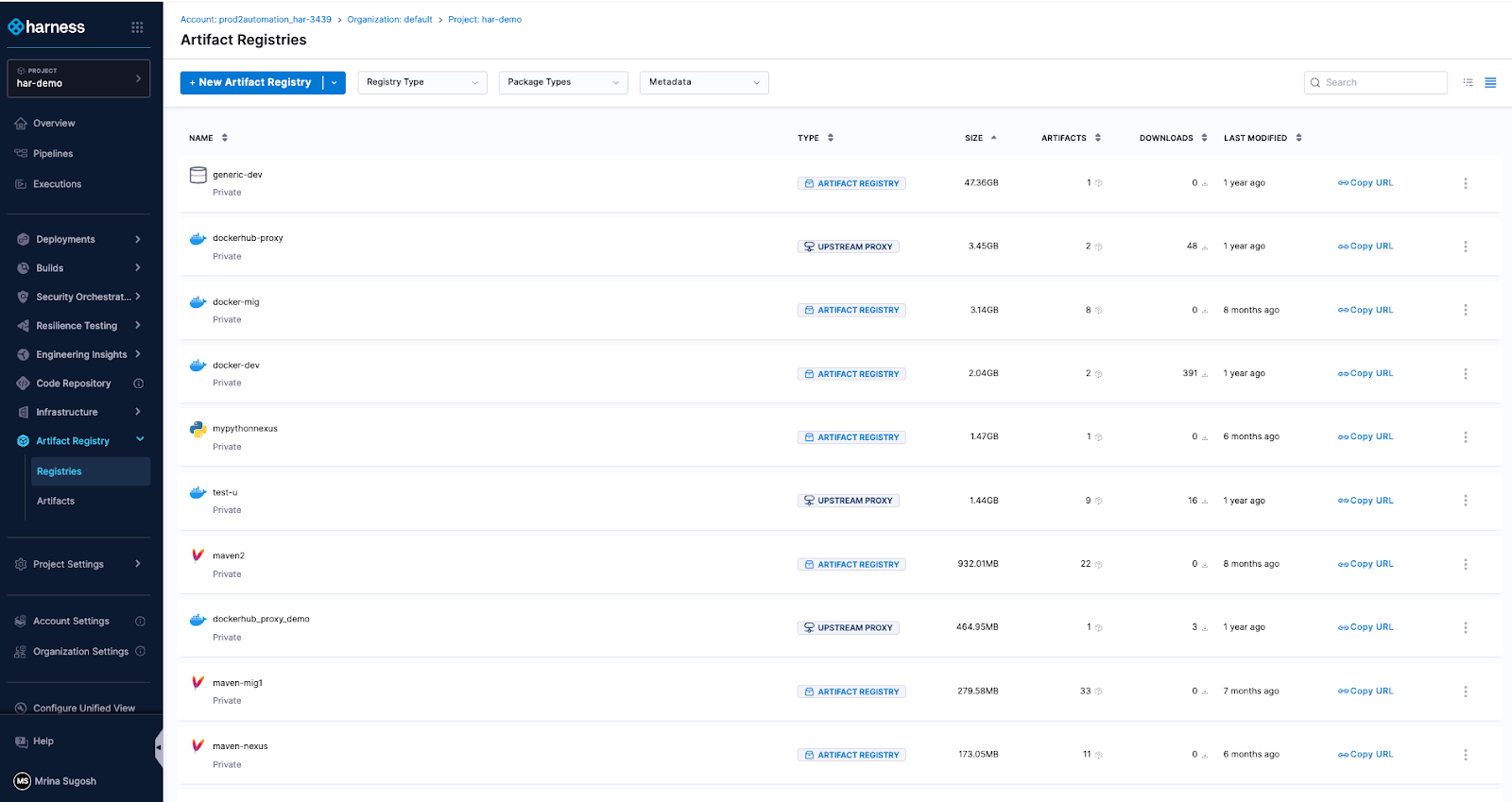
One early customer managing artifacts across Docker, Helm, Python, NPM, Go, and more has standardized on Harness Artifact Registry, achieving 100% CI adoption across teams and pipelines.
“Harness Artifact Registry is stable, performant, and easy to trust at scale, delivering faster and more reliable artifact pulls than our previous vendor”
— SRE Lead
By unifying artifact storage with the rest of the software delivery lifecycle, Artifact Registry simplifies operations while helping teams focus on shipping software.
Shifting from Passive Storage to Active Governance
Software supply chain threats have become both more frequent and more sophisticated. High-profile incidents like the SolarWinds breach, where attackers injected malicious code into trusted update binaries affecting thousands of organizations, exposed how deeply a compromised artifact can penetrate enterprise systems. More recently, the Shai-Hulud 2.0 campaign saw self-propagating malware compromise hundreds of npm packages and tens of thousands of downstream repositories, harvesting credentials and spreading automatically through development environments.
As these attacks show, risk doesn’t only exist after a build, it can be embedded long before artifacts reach CI/CD pipelines. That’s why Harness Artifact Registry was designed with governance at its core.
Blocking Risky Dependencies Before They Reach Your Pipeline
Harness Artifact Registry includes Dependency Firewall, a control point that allows organizations to govern which dependencies are allowed into their environment in the first place. Rather than relying on downstream scans after a package has already been pulled into CI/CD, Dependency Firewall evaluates dependency requests at ingest using policy-based controls.
This allows teams to proactively block risky artifacts before they are ever downloaded. Organizations can prevent the use of dependencies with known CVEs or license violations, blocking risky dependencies before they reach your pipeline, and restrict access to untrusted or unsafe upstream sources by default. The result is earlier risk reduction, fewer security exceptions later in the pipeline, and stronger alignment between AppSec and development teams without slowing delivery.
[Dependency Firewall Explainer Video]
Automatically Blocking Risky Artifacts Before Deployment
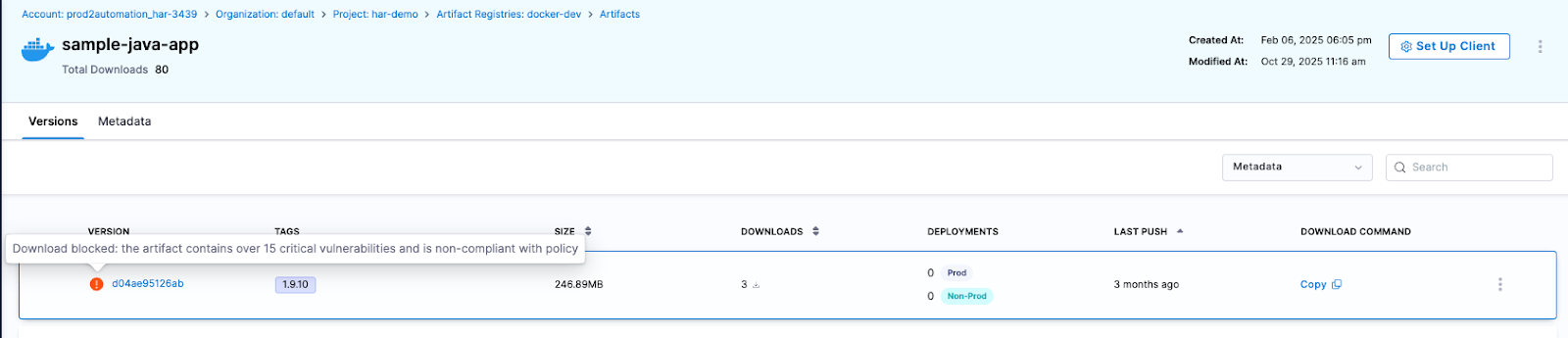
To further strengthen supply chain protection, Artifact Registry provides built-in artifact quarantine, allowing organizations to automatically block artifacts that fail security or compliance checks. Quarantined artifacts cannot be downloaded or deployed until they meet defined policy requirements, helping teams stop risk before it moves downstream. All quarantine actions are policy-driven, fully auditable, and governed by RBAC, ensuring that only authorized users or systems can quarantine or release artifacts.
Integrating Security into Existing Scanning Workflows
Rather than forcing teams to replace the tools they already use, Harness Artifact Registry is built to fit into real-world security workflows by unifying scanning and governance at the registry layer. Today, Artifact Registry includes built-in scanning powered by Aqua Trivy for vulnerabilities, license issues, and misconfigurations, and integrates with over 40 security scanners, including tools like Wiz, for container, SCA, and compliance checks. Teams can orchestrate these scans directly in their CI pipelines, with scan results feeding into policy evaluation to automatically determine whether an artifact is released or quarantined.
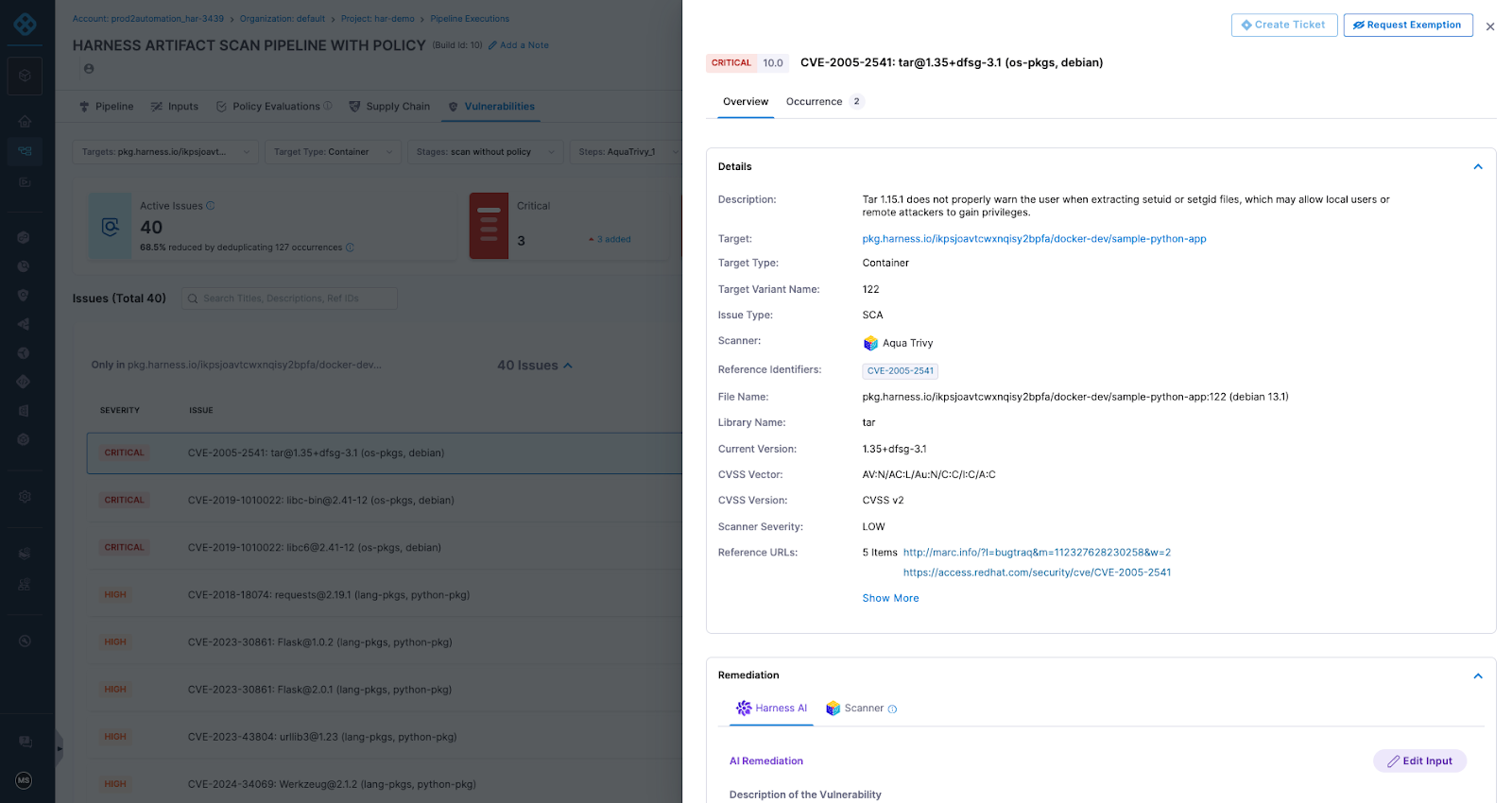
Artifact Registry also exposes APIs that allow external security and ASPM platforms to trigger quarantine or release actions based on centralized policy decisions. Together, these capabilities enable organizations to enforce consistent, policy-driven controls early, stop risky artifacts before they move downstream, and connect artifact governance to broader enterprise security workflows all without slowing down developers.
How Artifact Registry Is Transforming Software Delivery
As organizations scaled, legacy registries have become bottlenecks disconnected from CI/CD, security, and governance workflows. Harness takes a different approach. Because Artifact Registry is natively integrated into the Harness platform, teams benefit from:
- Native CI/CD integration with no extra tooling
- Fast and seamless adoption for existing Harness customers
- Shared visibility across Platform, DevOps, and AppSec teams
- Security enforced early through built-in governance and Dependency Firewall
This tight integration has accelerated adoption by removing friction from day-to-day workflows. Teams are standardizing how artifacts are secured, distributed, and governed across the software delivery lifecycle, while keeping developer workflows fast and familiar.
What’s Next for Artifact Registry?
Harness Artifact Registry was built to modernize artifact management for the enterprise, combining high-performance distribution with built-in security, governance, and visibility. We’ve continued to invest in a platform designed to scale with modern delivery pipelines and we’re just getting started.
Looking ahead, we’re expanding Artifact Registry in three key areas:
Package Ecosystem Expansion
Support is coming for Alpine, Debian, Swift, RubyGems, Conan, and Terraform packages, enabling teams to standardize more of their software supply chain on a single platform.
Governance, Security, and Operational Control
We’re investing in artifact lifecycle management, immutability, audit logging, storage quota controls, and deeper integration with Harness Security Solutions.
AI, Visibility, and Integrations
Upcoming capabilities include semantic artifact discovery, custom dashboards, AI-powered chat, OSS gatekeeper agents, and deeper integration with Harness Internal Developer Portal.
Modern software delivery demands clear control over how software is built, secured, and distributed. As supply chain threats increase and delivery velocity accelerates, organizations need earlier visibility and enforcement without introducing new friction or operational complexity.
We invite you to sign up for a demo and see firsthand how Harness Artifact Registry delivers high-performance artifact distribution with built-in security and governance at scale.