Modernize artifact management with built-in security and governance. Secure dependencies at ingest and scale software delivery with confidence.

Today, Harness is announcing the General Availability of Artifact Registry, a milestone that marks more than a new product release. It represents a deliberate shift in how artifact management should work in secure software delivery.
For years, teams have accepted a strange reality: you build in one system, deploy in another, and manage artifacts somewhere else entirely. CI/CD pipelines run in one place, artifacts live in a third-party registry, and security scans happen downstream. When developers need to publish, pull, or debug an artifact, they leave their pipelines, log into another tool, and return to finish their work.
It works, but it’s fragmented, expensive, and increasingly difficult to govern and secure.
At Harness, we believe artifact management belongs inside the platform where software is built and delivered. That belief led to Harness Artifact Registry.
A Startup Inside Harness
Artifact Registry started as a small, high-ownership bet inside Harness and a dedicated team with a clear thesis: artifact management shouldn’t be a separate system developers have to leave their pipelines to use. We treated it like a seed startup inside the company, moving fast with direct customer feedback and a single-threaded leader driving the vision.The message from enterprise teams was consistent: they didn’t want to stitch together separate tools for artifact storage, open source dependency security, and vulnerability scanning.
So we built it that way.
In just over a year, Artifact Registry moved from concept to core product. What started with a single design partner expanded to double digit enterprise customers pre-GA – the kind of pull-through adoption that signals we've identified a critical gap in the DevOps toolchain.
Today, Artifact Registry supports a broad range of container formats, package ecosystems, and AI artifacts, including Docker, Helm (OCI), Python, npm, Go, NuGet, Dart, Conda, and more, with additional support on the way. Enterprise teams are standardizing on it across CI pipelines, reducing registry sprawl, and eliminating the friction of managing diverse artifacts outside their delivery workflows.
One early enterprise customer, Drax Group, consolidated multiple container and package types into Harness Artifact Registry and achieved 100 percent adoption across teams after standardizing on the platform.
As their Head of Software Engineering put it:
"Harness is helping us achieve a single source of truth for all artifact types containerized and non-containerized alike making sure every piece of software is verified before it reaches production." - Jasper van Rijn
Why This Matters: The Registry as a Control Point
In modern DevSecOps environments, artifacts sit at the center of delivery. Builds generate them, deployments promote them, rollbacks depend on them, and governance decisions attach to them. Yet registries have traditionally operated as external storage systems, disconnected from CI/CD orchestration and policy enforcement.
That separation no longer holds up against today’s threat landscape.
Software supply chain attacks are more frequent and more sophisticated. The SolarWinds breach showed how malicious code embedded in trusted update binaries can infiltrate thousands of organizations. More recently, the Shai-Hulud 2.0 campaign compromised hundreds of npm packages and spread automatically across tens of thousands of downstream repositories.
These incidents reveal an important business reality: risk often enters early in the software lifecycle, embedded in third-party components and artifacts long before a product reaches customers.When artifact storage, open source governance, and security scanning are managed in separate systems, oversight becomes fragmented. Controls are applied after the fact, visibility is incomplete, and teams operate in silos. The result is slower response times, higher operational costs, and increased exposure.
We saw an opportunity to simplify and strengthen this model.
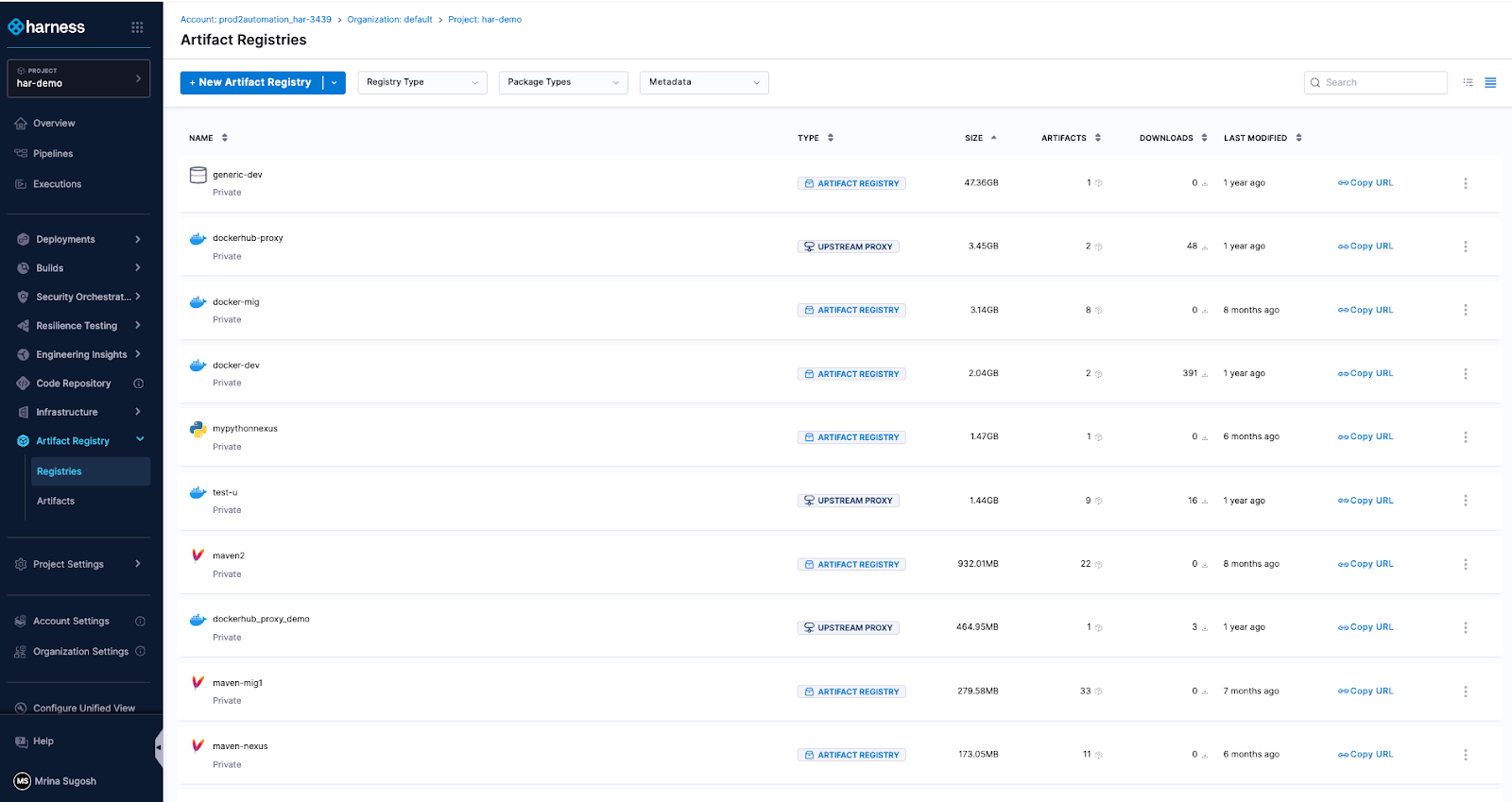
By embedding artifact management directly into the Harness platform, the registry becomes a built-in control point within the delivery lifecycle. RBAC, audit logging, replication, quotas, scanning, and policy enforcement operate inside the same platform where pipelines run. Instead of stitching together siloed systems, teams manage artifacts alongside builds, deployments, and security workflows. The outcome is streamlined operations, clearer accountability, and proactive risk management applied at the earliest possible stage rather than after issues surface.
Introducing Dependency Firewall: Blocking Risk at Ingest
Security is one of the clearest examples of why registry-native governance matters.
Artifact Registry delivers this through Dependency Firewall, a registry-level enforcement control applied at dependency ingest. Rather than relying on downstream CI scans after a package has already entered a build, Dependency Firewall evaluates dependency requests in real time as artifacts enter the registry. Policies can automatically block components with known CVEs, license violations, excessive severity thresholds, or untrusted upstream sources before they are cached or consumed by pipelines.
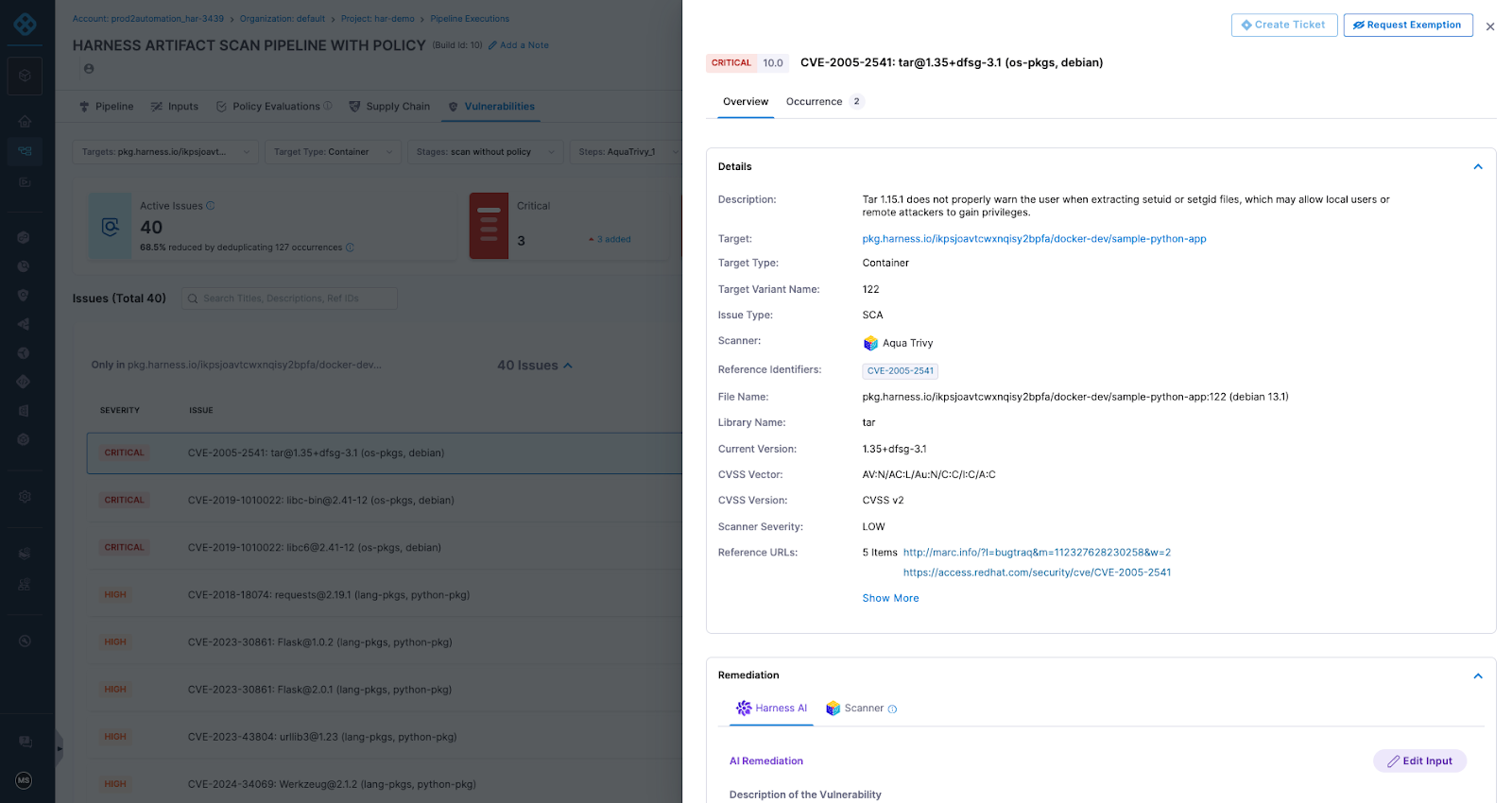
Artifact quarantine extends this model by automatically isolating artifacts that fail vulnerability or compliance checks. If an artifact does not meet defined policy requirements, it cannot be downloaded, promoted, or deployed until the issue is addressed. All quarantine and release actions are governed by role-based access controls and fully auditable, ensuring transparency and accountability. Built-in scanning powered by Aqua Trivy, combined with integrations across more than 40 security tools in Harness, feeds results directly into policy evaluation. This allows organizations to automate release or quarantine decisions in real time, reducing manual intervention while strengthening control at the artifact boundary.
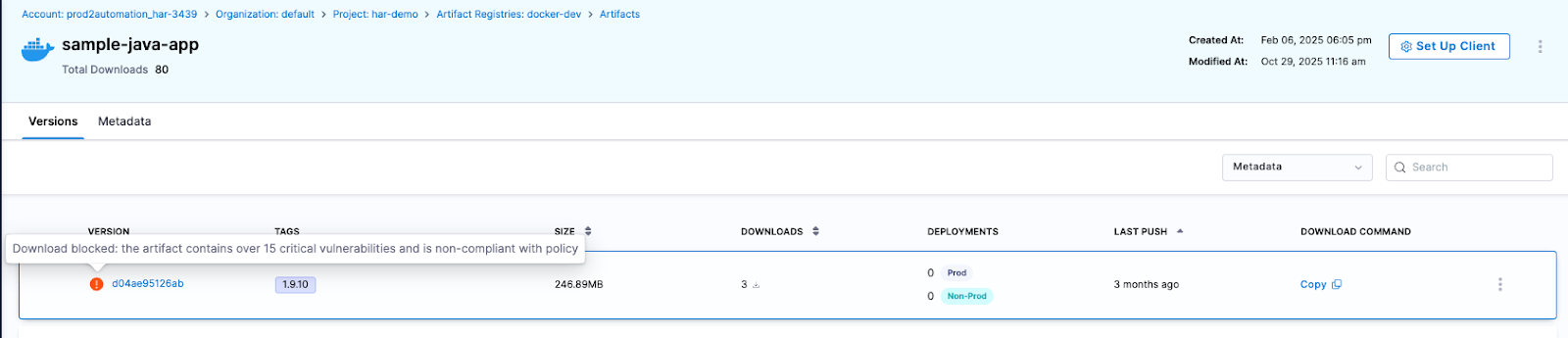
The result is a registry that functions as an active supply chain control point, enforcing governance at the artifact boundary and reducing risk before it propagates downstream.
The Future of Artifact Management is here
General Availability signals that Artifact Registry is now a core pillar of the Harness platform. Over the past year, we’ve hardened performance, expanded artifact format support, scaled multi-region replication, and refined enterprise-grade controls. Customers are running high-throughput CI pipelines against it in production environments, and internal Harness teams rely on it daily.
We’re continuing to invest in:
- Expanded package ecosystem support
- Advanced lifecycle management, immutability, and auditing
- Deeper integration with Harness Security and the Internal Developer Portal
- AI-powered agents for OSS governance, lifecycle automation, and artifact intelligence
Modern software delivery demands clear control over how software is built, secured, and distributed. As supply chain threats increase and delivery velocity accelerates, organizations need earlier visibility and enforcement without introducing new friction or operational complexity.
We invite you to sign up for a demo and see firsthand how Harness Artifact Registry delivers high-performance artifact distribution with built-in security and governance at scale.