Harness AI Cost Management brings visibility, attribution, and unit economics to AI workloads, helping teams track spend, measure agent ROI, and govern AI costs across providers.

The pace of AI spend has gotten ahead of most teams. New agents, new copilots, new flows powered by language models, all moving from prototype to production in weeks. Finance is often the first to flag it, because the data lives across provider invoices, gateway dashboards, observability tools, and cloud bills with no single source of truth. A small change to a prompt or a model can move spend by an order of magnitude. A retry loop in an agent can burn a month of budget in an afternoon.
Across customer and analyst conversations, the same questions keep surfacing. What are we spending on AI today, across providers and teams? How do we attribute that spend to the products, features, and customers driving it? At the unit level, not the invoice level, is each AI feature actually economical?
Today we're launching Harness Cloud & AI Cost Management, a new product that puts AI spend and cloud spend into the same system, with the same allocation, governance, and anomaly detection.
Cloud Cost Management has been part of Harness for years. Its primitives (cost categories, perspectives, budgets, anomaly detection) work because they meet teams where they already manage cloud. Cloud & AI Cost Management applies those same primitives to AI workloads and adds the granularity AI requires: session, agent, run, step, and individual LLM call. The deeper shift is unit economics. Every dollar of AI spend gets tied to the agent, session, and outcome it produced, so AI features can be evaluated by what they cost per outcome rather than what they show on the monthly invoice.
What ships today
AI Cost Economics Dashboard
Unit economics surfaced natively for measuring AI outcomes:
- Cost per agent run
- Cost per session, including multi-turn conversations
- Cost per inference
- Cost broken down by token type, session, inference, and use case
- Agent ROI tied to business outcomes (cost per resolved ticket, cost per completed workflow, cost per customer interaction)
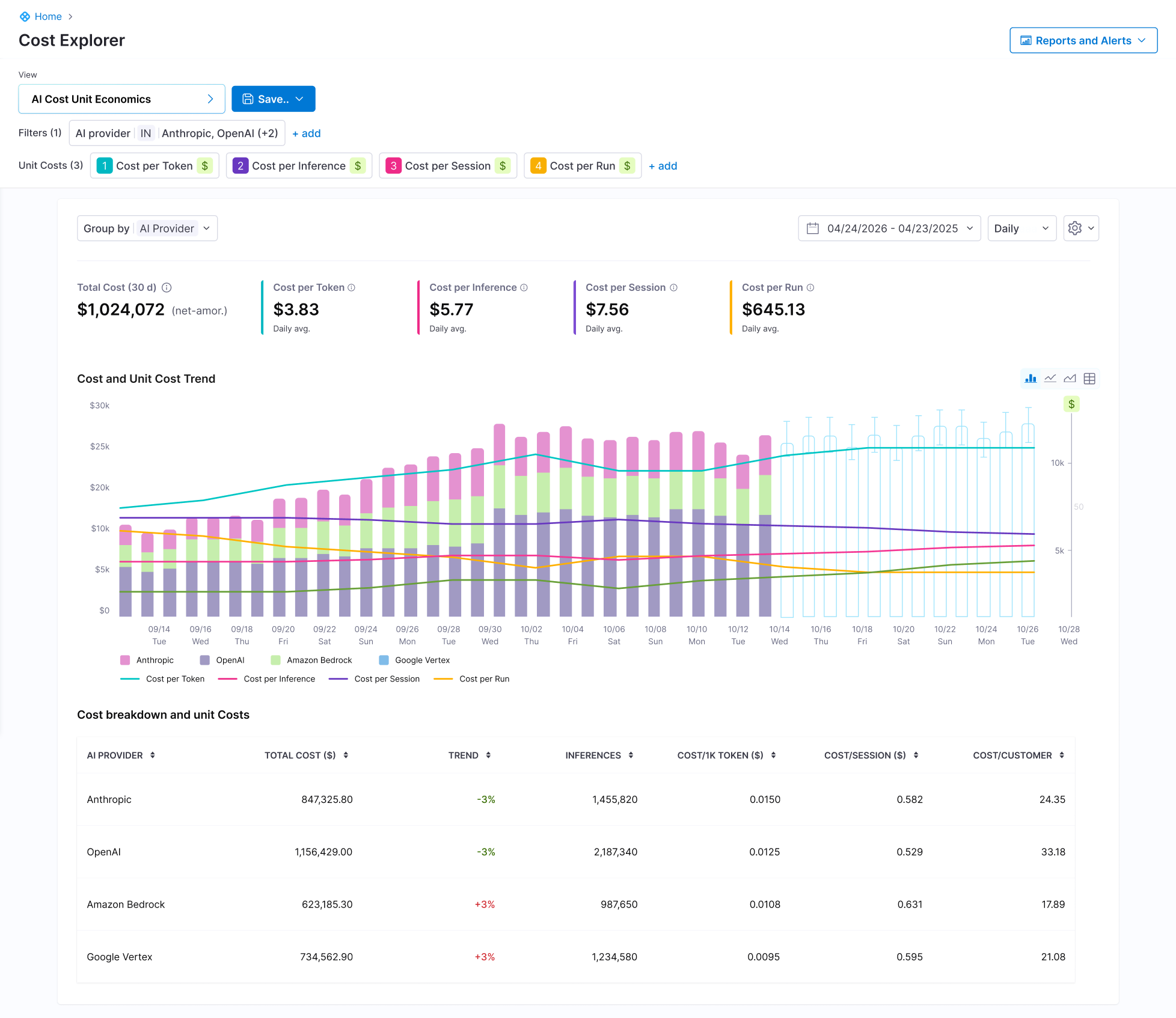
Cost by Provider
Unified visibility across native LLM providers and managed AI services. OpenAI and Anthropic for direct API spend. AWS Bedrock and GCP Vertex AI for managed services. Spend is normalized across providers, so comparisons and analysis don't require custom pipelines.
Cost by Model
Per-model and per-version cost tracking, with input and output token volumes, inference counts, and trends. Useful for evaluating model choice, watching the impact of a model upgrade, and identifying which models are growing fastest in spend.
Unit Economics by Agent
Cost attributed to AI agents, whether internal copilots, customer-facing assistants, or background automations. Inferences, session cost, token usage, and trends surfaced per agent so engineering and product teams can evaluate cost-per-outcome at the agent level.
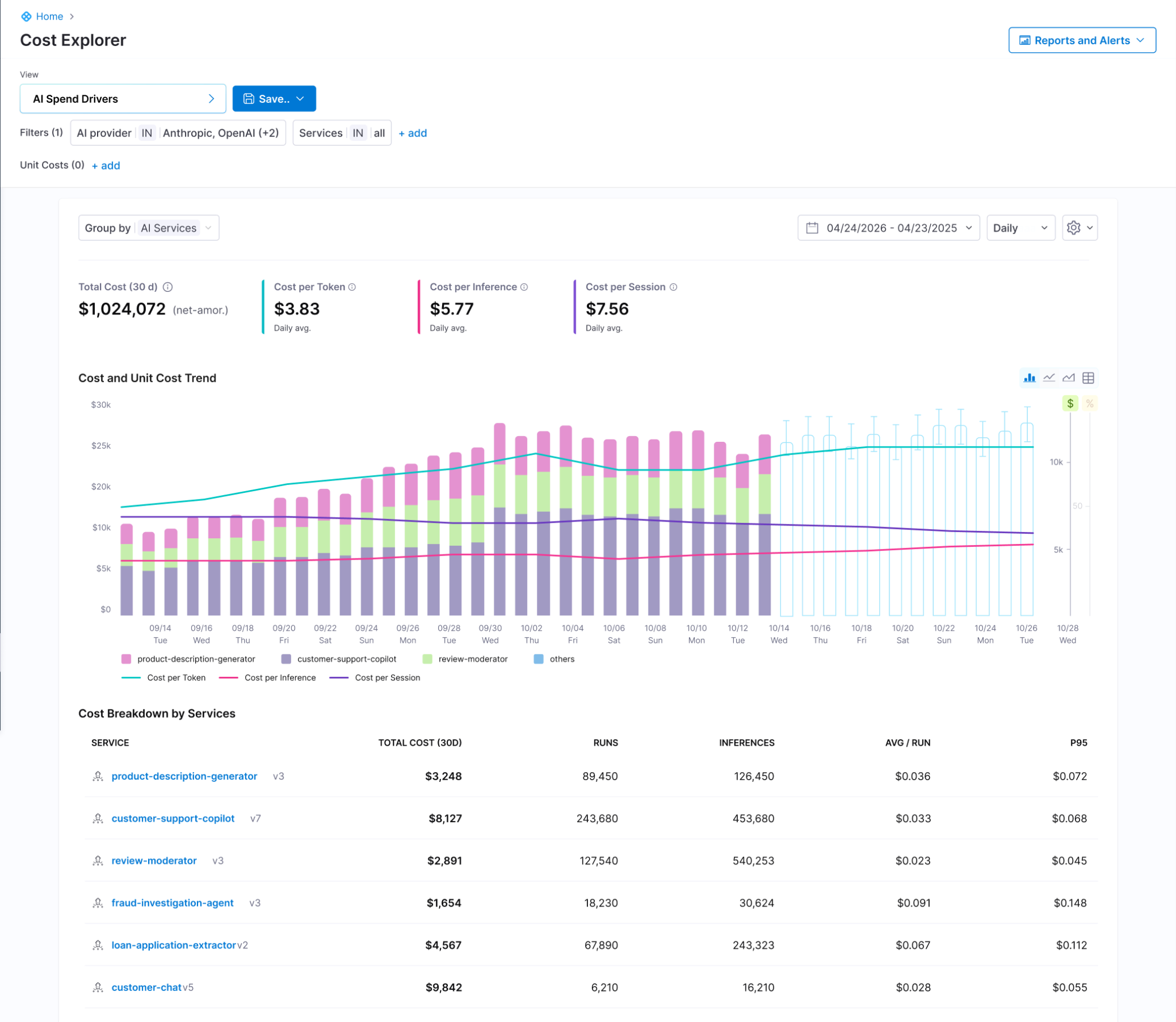
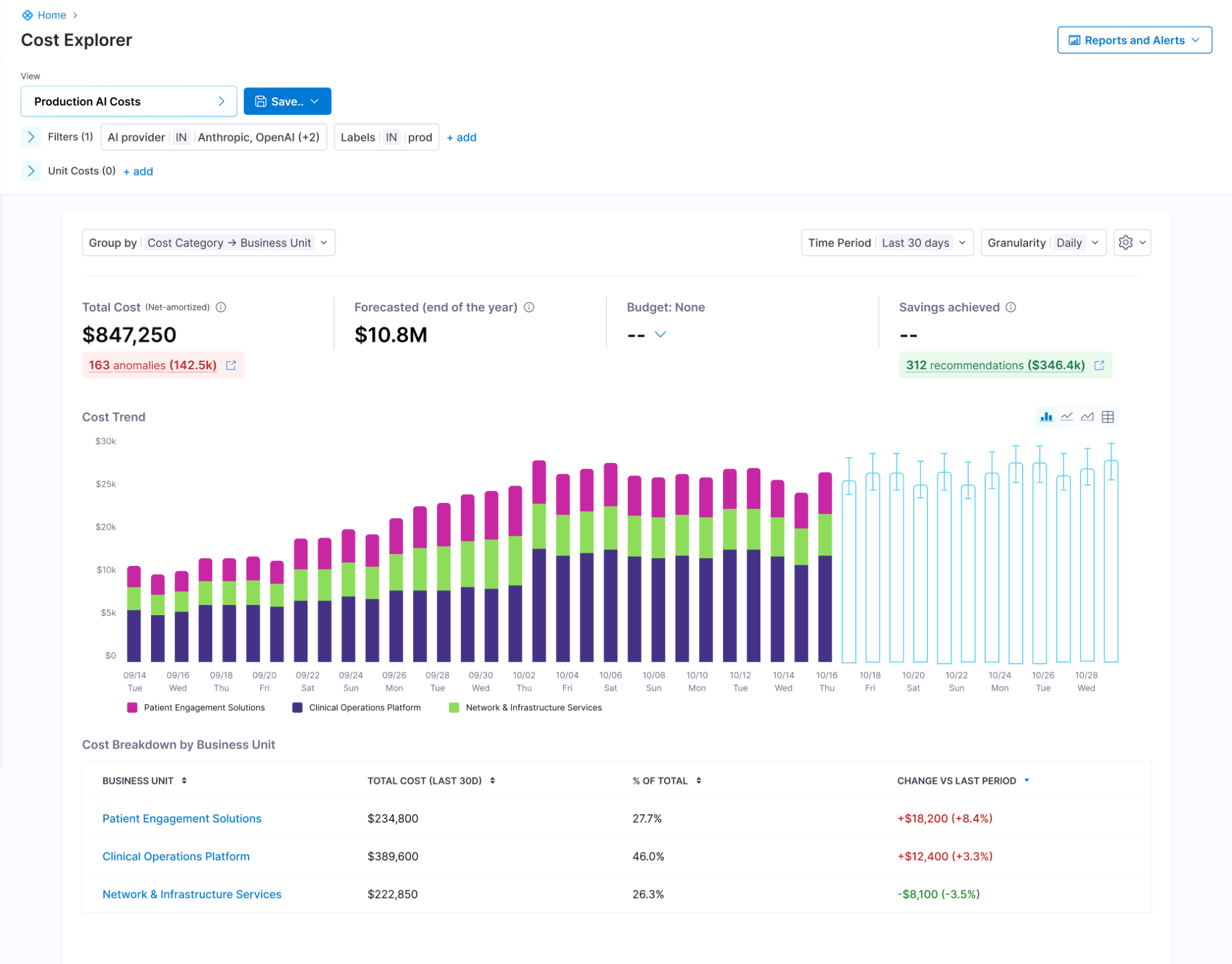
Custom Unit Economics Using Cost Categories
Attribute AI spend to any customer-defined construct, including business unit, product line, customer tier, or feature. Built on the existing cost categories framework, so the rules teams have already written for cloud chargeback apply to AI spend with no extra setup.
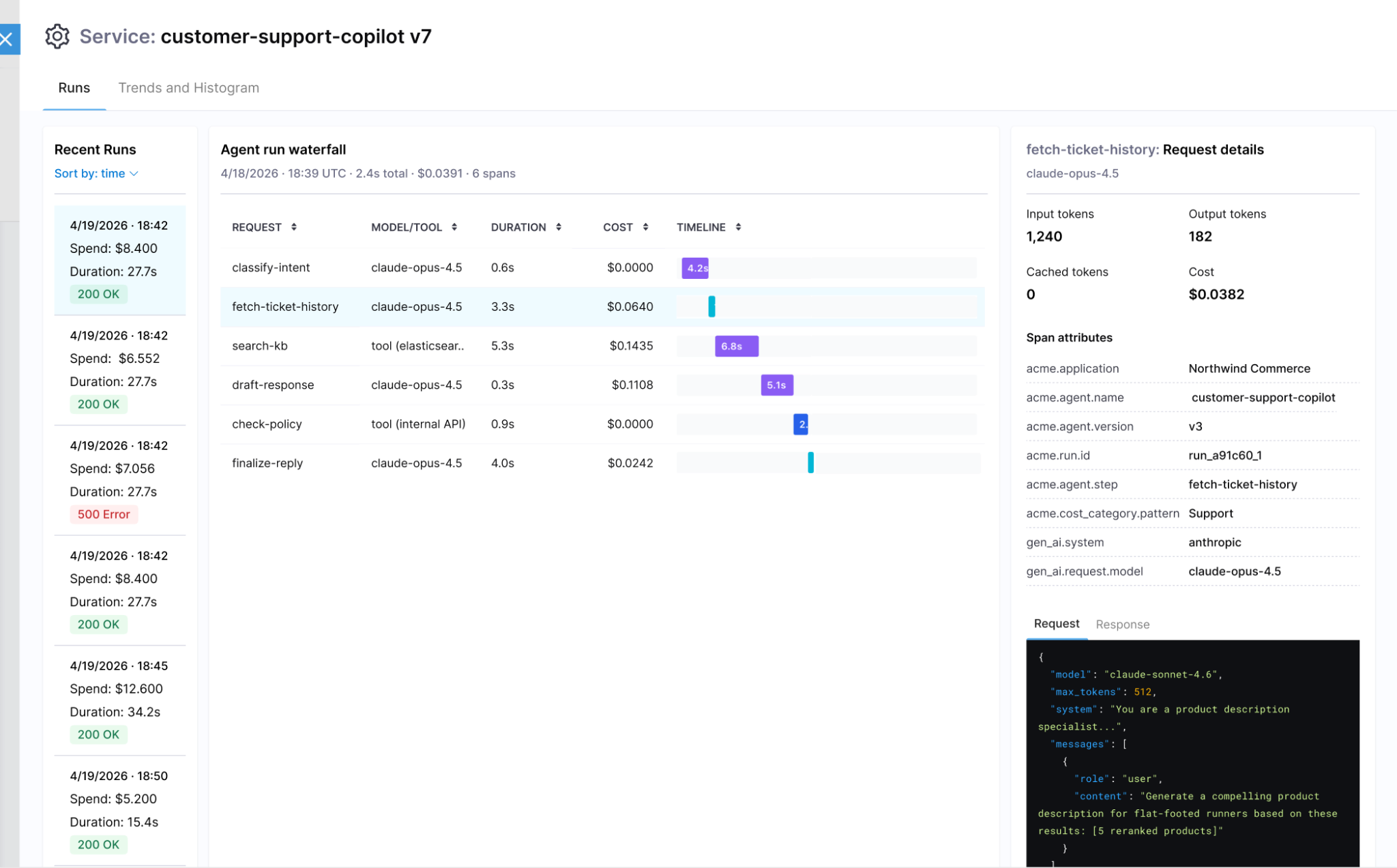
Session and Conversation Level Granularity
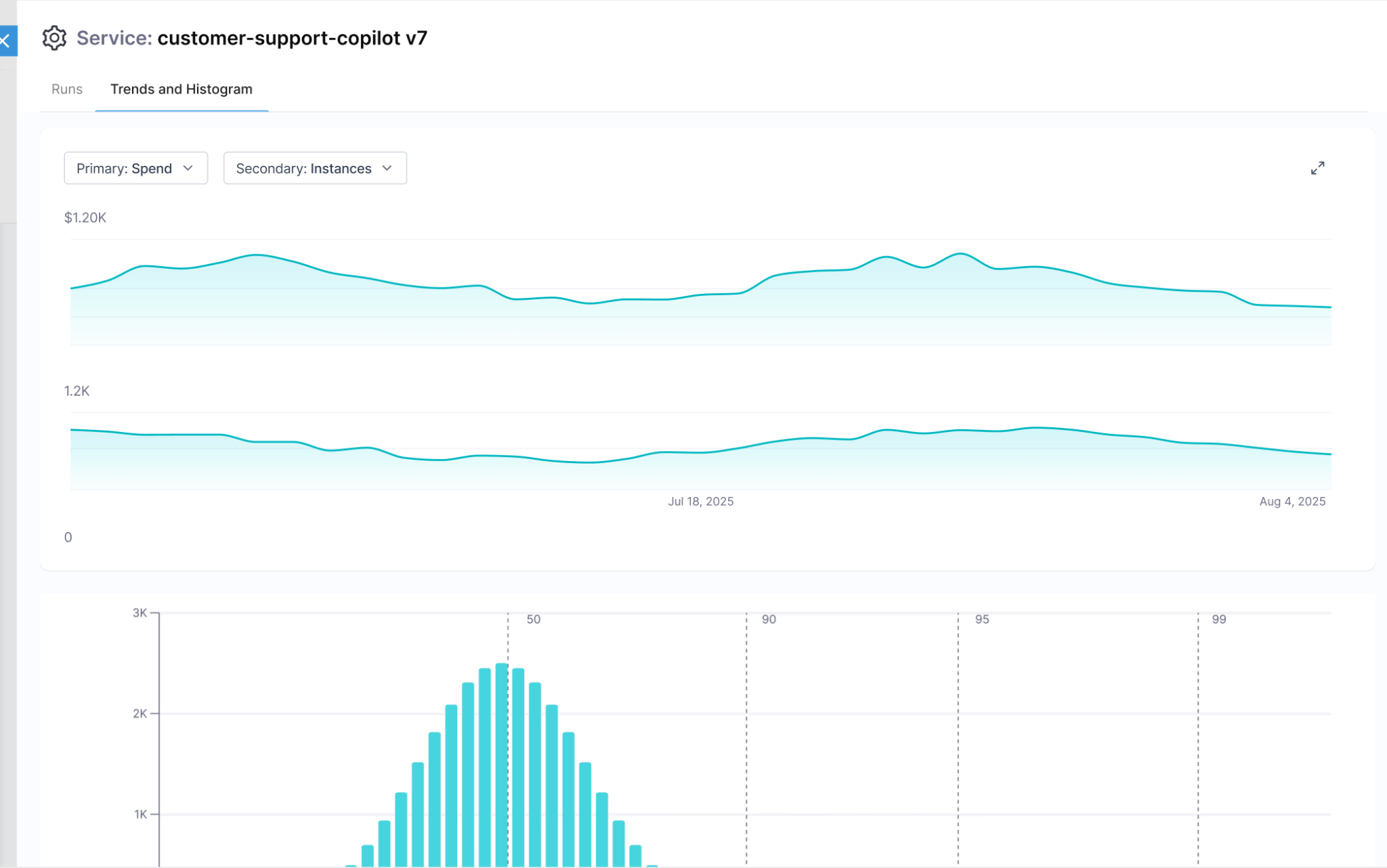
Cost per session, cost per multi-turn interaction, and token composition broken down by call. This is the level of detail provider billing APIs can't give. A multi-turn conversation that costs four times an average session because the agent is looping through a tool chain becomes visible, attributable, and fixable.
AI Cost Explorer
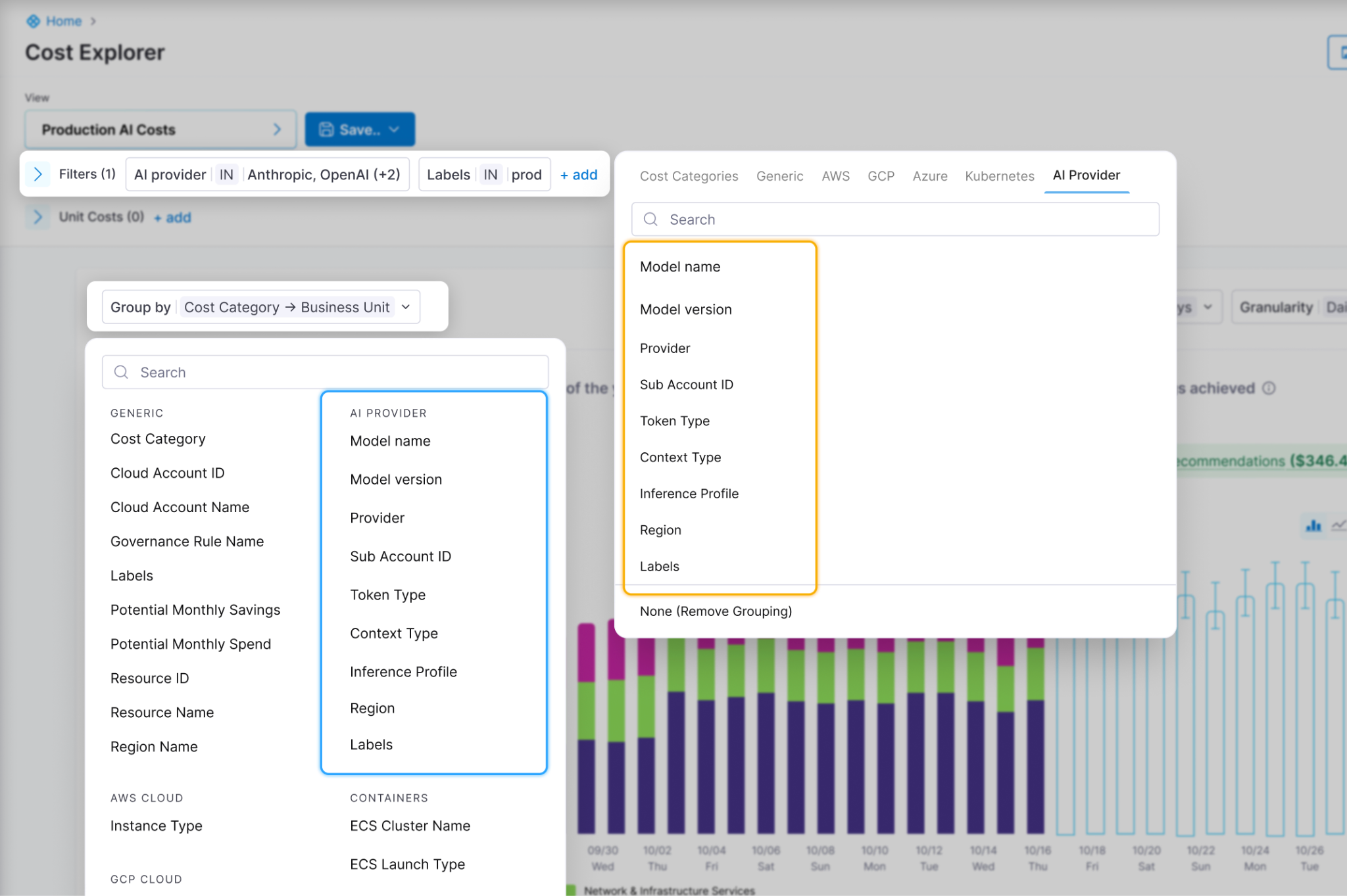
Filter and group AI spend by the dimensions that matter for AI workloads:
- Provider, account, and project
- Model and model version
- Token type, including input, output, and cache reads and writes
- Context type and inference profile, including standard, long context, and global routing
- Region
- Labels and custom dimensions
Drill from business-level metrics down to raw cost data, with filters that compose the same way they do everywhere else in the product.
One platform for cloud and AI cost
Most AI cost tools are point solutions. They show AI spend in their own dashboards with their own allocation model. That's useful for visibility, less useful when you're trying to govern AI alongside the cloud spend driving the rest of your infrastructure bill.
Existing Harness Cloud Cost Management customers get something different. The chargeback rules, cost categories, and budgets already written for cloud spend now apply to AI workloads. AI cost becomes another allocation in the same system, not a parallel workstream to reconcile separately.
The depth also goes further than provider billing APIs allow. AI spend can be analyzed at agent, session, run, and step level, down to the model and tool invoked at each step. Worst-case behavior surfaces as itself rather than averaged into a monthly number, and the same dimensions plug into cost categories, perspectives, and budgets.
Getting AI cost into Harness
Three ingestion paths let teams adopt the depth that matches their stage. Provider connectors give fast unified visibility across OpenAI, Anthropic, Bedrock, and Vertex. Gateway integration adds per-request attribution. OpenTelemetry traces give full session and workflow detail. Most teams start with connectors and add depth as their AI footprint grows.
What this looks like in practice
A customer-support copilot might show $28,000 on a monthly invoice. That number alone doesn't tell you whether the bot is earning its keep. The more useful number is $0.60 per resolved ticket. And when a session costs $4 because the agent is looping through tools it shouldn't be using, that surfaces as a code problem you can fix, not a line item to explain after the fact.
Existing Cloud Cost Management customers can enable AI Cost Management today. For everyone else, request a demo.