Learn how the Mastra AI supply chain attack poisoned npm packages, impacted AI pipelines, and how Harness SCS helps detect, block, and remediate compromised dependencies.

The open-source landscape has witnessed another highly automated, ecosystem-level subversion. On June 17, 2026, a critical software supply chain attack struck the Mastra AI framework - a popular open-source TypeScript ecosystem used widely to build AI agents, workflows and RAG pipelines. By exploiting a compromised contributor account, threat actors successfully mass-published 144 malicious packages under the official @mastra npm scope.
The packages themselves contained no malicious code within their repositories; instead, they were altered at the registry level to pull in a weaponized transitive dependency called easy-day-js. Any developer workstation, CI/CD runner or cloud environment executing a routine installation during the compromise window was immediately exposed to a sophisticated cross-platform information stealer. This article delivers a comprehensive technical teardown of the attack mechanics and its stealthy execution pipeline.
Preface
Modern application engineering moves at the speed of automated dependency resolution. Rather than writing utility functions from scratch, software teams routinely orchestrate architectures that pull hundreds of third-party open-source components during active builds and deployment pipelines. This reliance sets up a structural trust chain: developers trust the package registry, the registry trusts the maintainer's cryptographic identity and downstream environments trust that updates are safe and authentic.
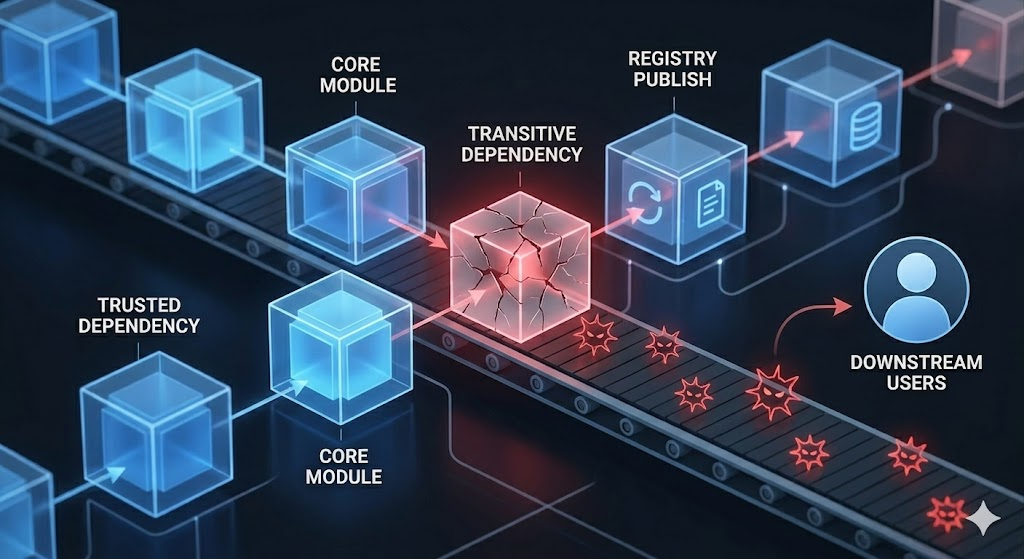
However, this architecture exposes a massive, interconnected attack surface. When an adversary manages to compromise an upstream account or subvert a single verification step, the entire downstream distribution network turns into an automated malware delivery pipeline. The Mastra incident highlights a growing shift where threat actors stop targeting production firewalls directly and focus heavily on poisoning the automated software supply chain.
Introduction
At its core, the Mastra supply chain compromise was designed to abuse default package installation behavior to execute arbitrary code, bypass standard static scanners, harvest sensitive host credentials and establish long-term persistence across multiple operating systems.
What makes this attack structurally advanced is its combination of trust exploitation and defensive evasion:
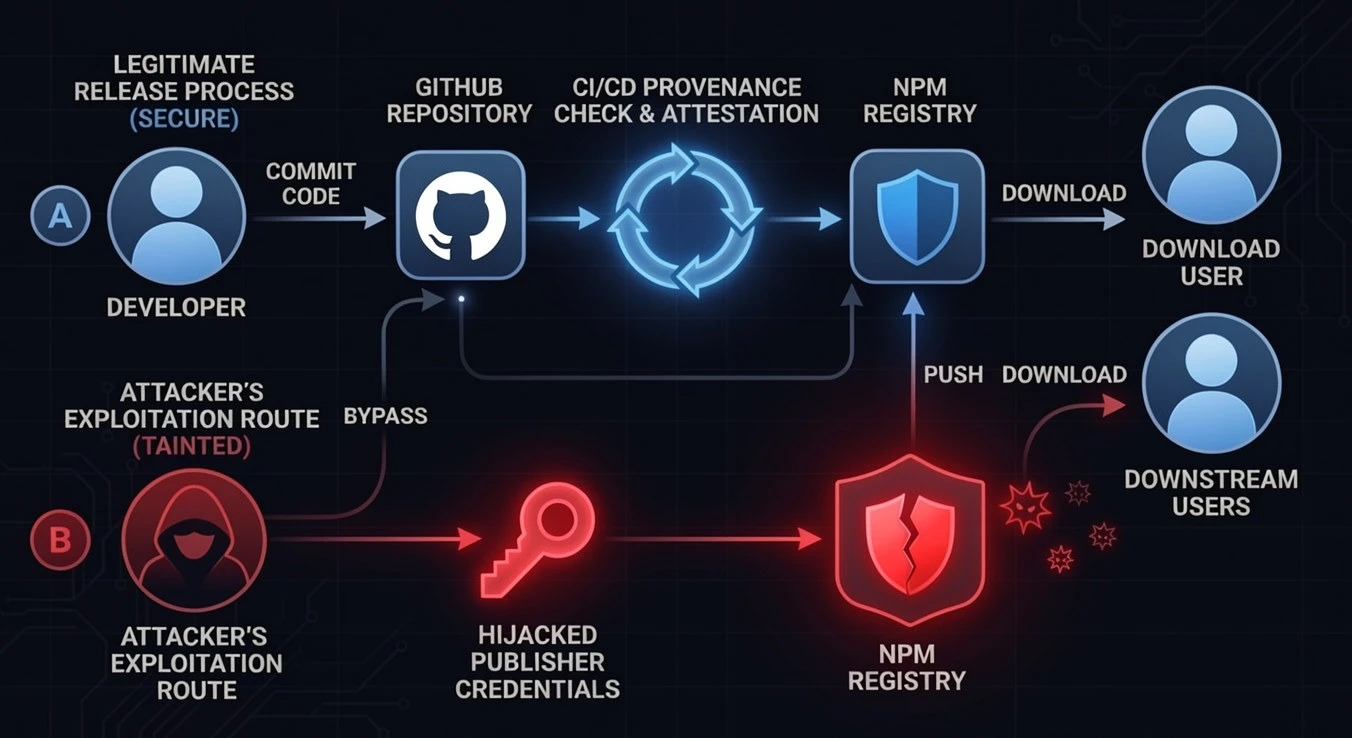
- Provenance Deception - While the Mastra ecosystem typically publishes official releases via automated CI pipelines backed by SLSA provenance attestations, the attacker used a hijacked contributor token to publish directly to the npm registry. By stripping the provenance attestations, the malicious versions bypassed traditional verification layers while remaining structurally identical to legitimate software updates.
- Transitive Infiltration - The core source code within Mastra's public GitHub repository remained entirely clean. The anomaly was introduced solely inside the published registry tarballs by altering the package.json configurations to demand an external, attacker-controlled module.
- Volatile Loading & Self-Deletion - The first-stage payload was engineered as a transient dropper. It disabled local transport security, fetched a secondary backdoor payload into memory, spawned it as an isolated system process and then deleted its own source files from disk to eliminate obvious post-incident footprints.
Deepdive Into The Mastra Exploit
The campaign was executed within an intensive, automated 88-minute window. Rather than engineering a complex repository exploit, the attacker capitalized on a dormant contributor account ehindero whose publishing access to the @mastra npm scope had not been explicitly revoked. Let's break down the exploit lifecycle step-by-step.
Initial Access & The ehindero Account Compromise
Every supply chain attack requires an initial wedge to subvert the trust architecture. In this campaign, the breach did not stem from a flaw in Mastra’s core source code, but rather from an authentication gap on a historical contributor account by the name of ehindero. Security analysis indicated the account takeover occurred through a combination of two common supply chain vulnerabilities as discussed below.
- The contributor account lacked enforced Multi-Factor Authentication on the npm registry. Threat actors cross-referenced public data breaches to match historical password reuse, successfully logging directly into the publisher profile via automated scripting.
- Further forensic tracking suggested that an active personal access token with broad scope write permissions had accidentally been preserved inside an unencrypted local configuration environment on a legacy workstation.
The Transitive Dependency & Caret Range Trick
The attack relied heavily on establishing a convincing upstream dependency. On June 16, 2026, the threat actor published a "bait" version of a typosquatted package named easy-day-js, mimicking the popular dayjs library. This initial version, v1.11.21, was completely clean and byte-for-byte identical to legitimate components, designed purely to evade early automated registry profiling.
The following day, the attacker published easy-day-js@1.11.22 - this time embedding a malicious postinstall script execution block. Simultaneously, using the hijacked contributor credentials, the attacker mass-republished 144 packages across the @mastra/* scope. In each of these packages, the attacker injected exactly one line given below into the published package.json:
"dependencies": {
  "easy-day-js": "^1.11.21"
}
Because npm interprets the caret ( ^ ) range to mean any minor or patch update up to the next major version, any fresh invocation of npm install for a Mastra package automatically resolved, downloaded and integrated the malicious v1.11.22 payload.
Bypassing Trusted Publishing Infrastructure
Mastra's legitimate delivery pipeline relies on OIDC-based short-lived publishing tokens. However, the npm registry still allowed manual token authentication paths. By utilizing a long-lived personal token belonging to the compromised account, the adversary circumvented the official GitHub Actions release loop. Although the resulting packages lacked the standard SLSA provenance attestations generated by the framework’s CI runner, consumption policies at the developer level rarely block packages simply due to missing attestations, allowing the unauthorized code to execute freely.
Detached Execution & Stealth Mechanics
When a system triggers the installation of the tainted package, the postinstall lifecycle hook automatically invokes an obfuscated script named setup.cjs. The loader performs the following actions:
- Disables TLS Verification - It overrides the environment configuration with process.env.NODE_TLS_REJECT_UNAUTHORIZED = "0", forcing the Node runtime to accept unverified, self-signed SSL certificates from the attacker's infrastructure.
- Drops Operational Logs - It creates temporary tracking files under the host's temp directory named .pkg_history and .pkg_logs.
- Fetches Stage 2 - The loader initiates an outbound HTTP request to the attacker's Command and Control (C2) endpoint, 23.254.164.92:8000, to retrieve an encrypted secondary payload.
- Detached Spawning - The second stage is written to a randomized 12-hex-character .js file and executed as a detached child process, giving it an independent process group that outlives the parent npm install command.
- Forensic Self-Deletion - The moment the second stage initializes in memory, the loader invokes fs.rmSync(__filename, { force: true }), completely removing the installer script from the local node_modules directory to blind basic static security utilities.
Cross-Platform Info-Stealing & Persistence
The secondary payload operates as a comprehensive cross-platform credential harvester. It systematically searches the host environment for sensitive telemetry:
- Browser Data Extraction - Targets local storage and credentials from Google Chrome, Microsoft Edge and Brave browsers.
- Cryptocurrency Exfiltration - Targets more than 160 browser-based cryptocurrency wallet extensions including MetaMask, Phantom, Coinbase and Binance to drain active sessions.
- Credential Harvesting - Scans local user spaces for cloud configuration tokens like .aws/credentials, environment variables, database keys and SSH profiles.
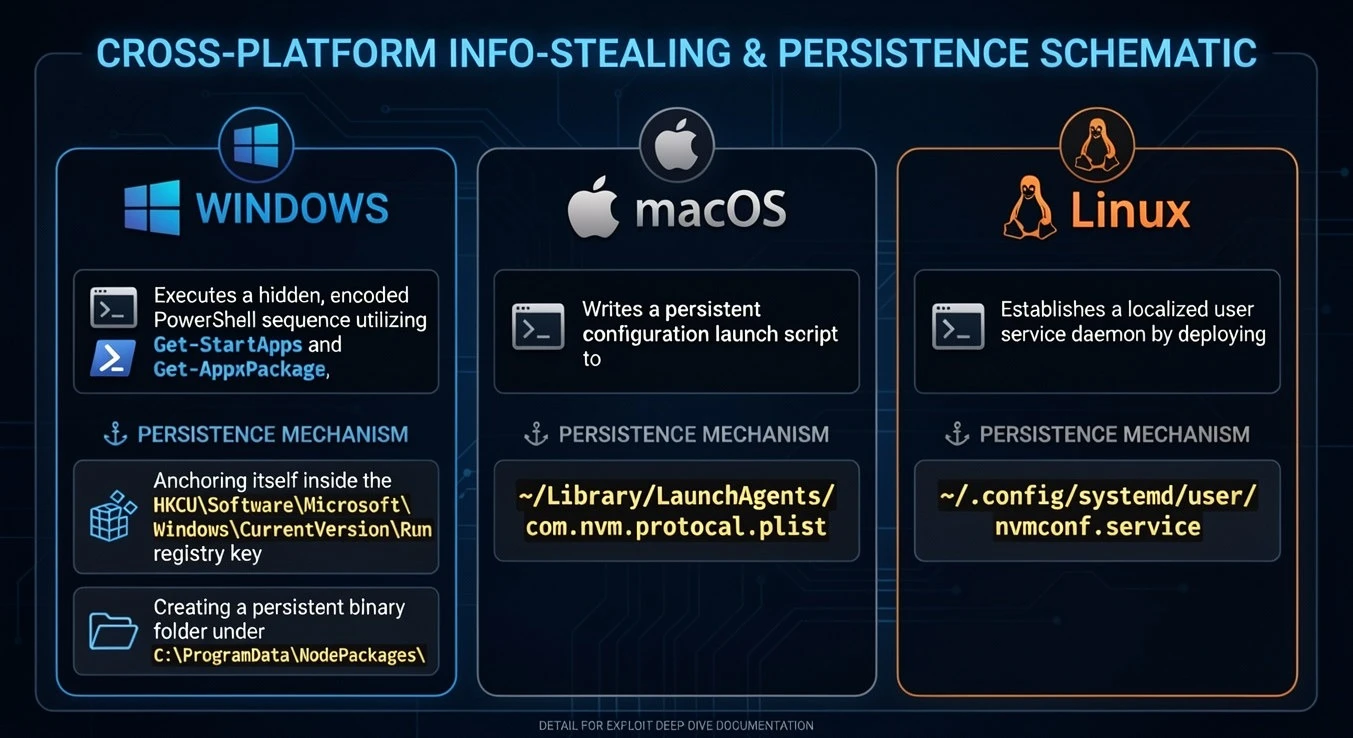
To ensure long-term control, the malware checks the host OS and installs specific persistence payloads. All harvested data is packaged and exfiltrated to the secondary C2 server located at 23.254.164.123.
Attacker compromises active/former contributor account (ehindero)
↓
Attacker publishes clean bait version easy-day-js@1.11.21
↓
Attacker uploads weaponized version easy-day-js@1.11.22 with postinstall hook
↓
Attacker uses compromised token to mass-publish 144+ @mastra packages
↓
Injected dependency ("easy-day-js": "^1.11.21") added directly to registry tarballs
↓
Developer or CI/CD runner executes npm install for a Mastra package
↓
Registry resolves caret range ^1.11.21 to the malicious v1.11.22
↓
postinstall lifecycle script triggers setup.cjs hook automatically
↓
Loader disables TLS verification and writes local tracking logs
↓
Second-stage payload downloaded from C2 infrastructure (23.254.164.92)
↓
Payload executed as a detached child process to survive parent completion
↓
setup.cjs executes self-deletion routine to erase forensic footprint
↓
Second stage harvests browser data, 160+ crypto wallets and password managers
↓
Cross-platform persistence established via LaunchAgents, systemd or Registry Run keys
↓
Stolen host credentials and secrets exfiltrated to C2 server (23.254.164.123)
Ecosystem Impact: The AI Pipeline Risk Factor
The blast radius of this campaign is significantly amplified by Mastra's core function as an AI development framework. Unlike generic utility libraries, AI orchestration frameworks are explicitly deployed in data-rich environments. They sit at the intersection of production software loops and deep enterprise backends, routinely interacting with proprietary vector databases, LLM clusters and extensive data integration pipelines.
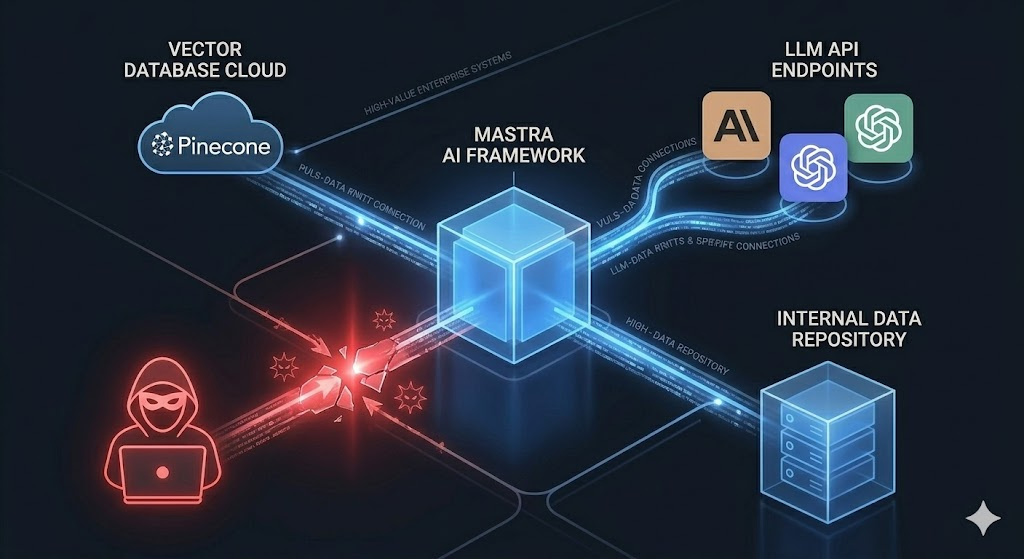
Consequently, a compromise within this specific ecosystem does not just threaten basic web infrastructure but also exposes high-value LLM API tokens, production database credentials and training data connection points. With a weekly download volume exceeding 1.1 million across the framework and the foundational @mastra/core package pulling roughly 918K downloads alone, the potential data exposure across developer endpoints and automated AI build servers represents a systemic risk to enterprise AI security models.
Compromised Packages
The entire compromise in the npm registry stems from the weaponized library easy-day-js, specifically version v1.11.22. This served as the malicious transitive dependency, resulting in the compromised Mastra AI framework outlined in the table below.
| Notable Impacted Packages | Affected Version Range |
|---|---|
| @mastra/core | v0.1.112 – v0.1.118 |
| @mastra/engine | v0.1.45 – v0.1.49 |
| @mastra/rag | v0.1.32 – v0.1.36 |
| @mastra/deployers | v0.1.12 – v0.1.14 |
| mastra (Top-level wrapper) | v0.1.112 – v0.1.118 |
| create-mastra | v0.1.50 |
Remediations
Defending against registry-level poisoning requires moving beyond passive perimeter filtering to implement proactive environment isolation and strict runtime controls. Organizations should immediately deploy the following protective protocols:
- Neutralize install-time droppers by globally disabling automatic package script execution. Run npm config set ignore-scripts true across all developer workstations and CI environments.
- Commit strict lockfiles like package-lock.json and pnpm-lock.yaml to version control and utilize deterministic installation flags like npm ci or pnpm install --frozen-lockfile within CI pipelines to prevent automated caret resolutions from pulling unverified upstream releases.
- Configure internal package consumption policies to strictly reject public registry updates that lack verified SLSA provenance attestations or match anomalies where a package shifts from a trusted CI publisher workflow to a manual personal token publish.
- If an infection vector is discovered, treat the host or runner as entirely compromised. Immediately rotate all connected cloud credentials, source control keys, database strings and LLM API keys exposed within that environment.
- Use Software Composition Analysis platforms such as Harness Supply Chain Security (SCS) to continuously inventory dependencies, enforce policy gates, detect malicious packages and block compromised artifacts before they enter build and release pipelines
According to Harness’s analysis of the npm attacks, organizations should treat CI/CD pipelines as critical security infrastructure, combining SBOM visibility, policy enforcement, provenance validation and automated dependency risk analysis to prevent trusted publishing systems from becoming malware distribution channels. Read more about it here.
How Harness Supply Chain Security Helps
Harness SCS helps you quickly detect and contain compromised dependencies like the Mastra AI packages before they impact your pipelines. With real-time visibility into your SBOMs and dependency graph, you can identify affected versions, trace their usage across builds and environments and block them using OPA policies. This ensures malicious packages never propagate through your CI/CD or AI workflows.
Detect Compromised Packages
Harness SCS enables instant search across all repositories and artifacts to quickly identify if compromised package versions exist in your environment. The moment such a malicious package is disclosed, you can pinpoint its presence and assess impact across your entire supply chain in seconds.
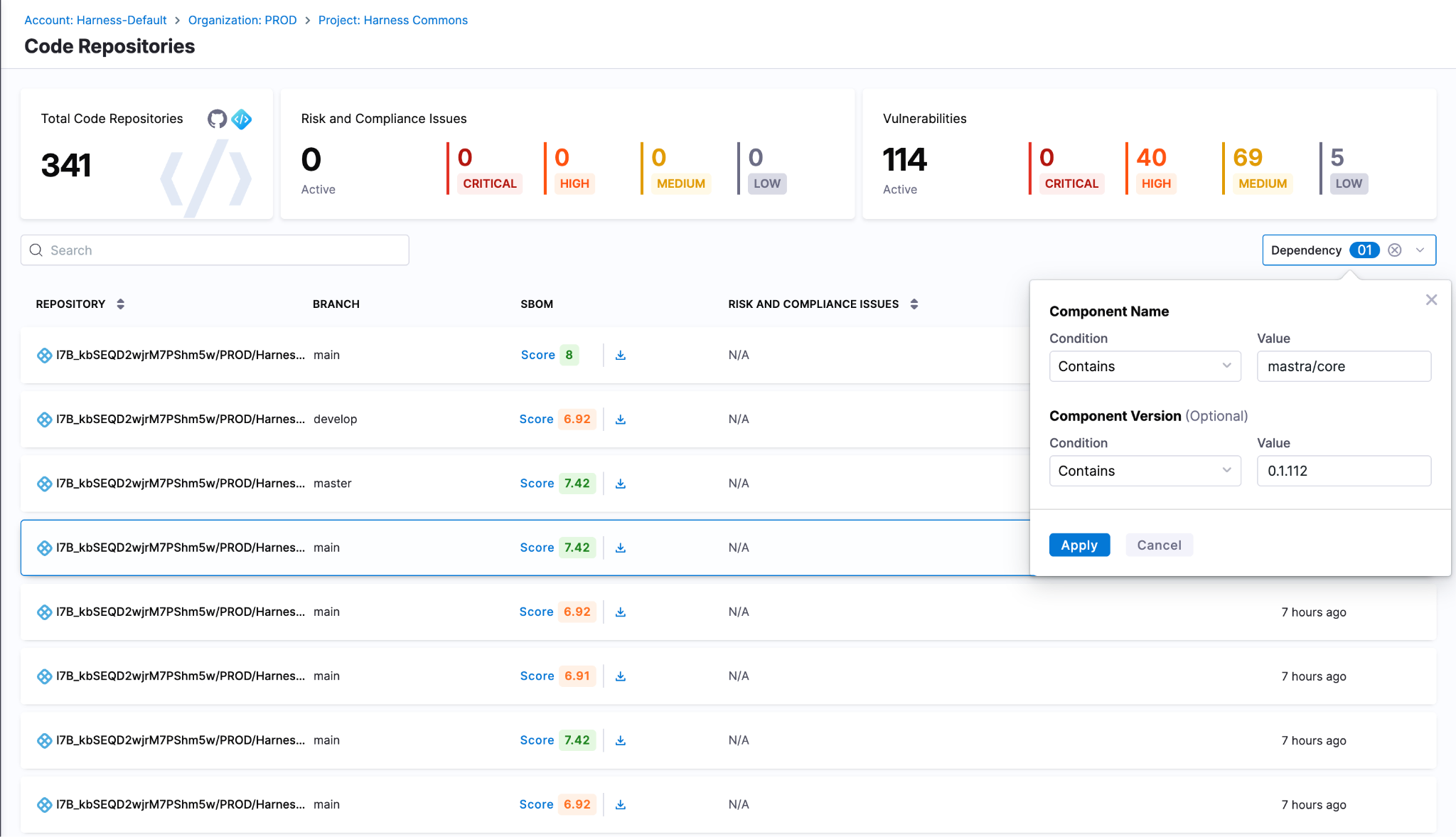
Block Compromised Packages
Harness AI streamlines response to incidents like the Mastra AI compromise through simple natural-language prompts. With a single prompt, you can generate OPA policies to block affected versions of Mastra packages, for example, across all pipelines, preventing malicious packages from entering builds or deployments. As new compromised versions emerge, these policies can be quickly updated to maintain strong preventive controls across your SDLC. SCS customers can use this OPA policy to detect and block the affected versions.
Track & Remediate Issues with Developers
Harness SCS automatically detects compromised versions across both production and non-production environments. Teams can track remediation, assign fixes and monitor progress through to deployment, ensuring exposed credentials and vulnerable dependencies are addressed quickly. This end-to-end visibility helps contain the impact and prevents compromised packages from persisting in your supply chain.
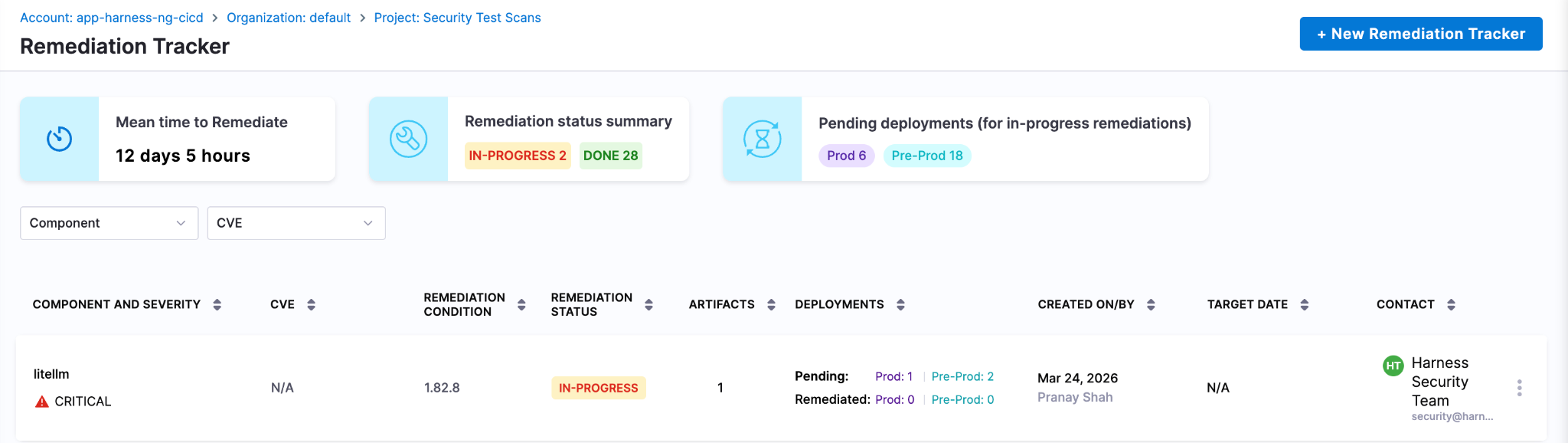
Next Steps In The Face Of Supply Chain Attacks
The easy-day-js campaign highlights how quickly a malicious package can expose high-value secrets when embedded deep within registries and CI runners. Given its role in managing dependencies and packages across projects, the impact extends beyond code to API keys, prompt data and downstream systems, often bypassing traditional security checks.
Defending against such attacks requires more than reactive fixes. Teams need real-time visibility into dependencies, the ability to enforce policies to block compromised versions and continuous tracking to ensure remediation is complete across all environments. Harness SCS enables teams to quickly identify where affected package versions are used, prevent them from entering new builds and ensure fixes are consistently rolled out.
With these controls in place, organizations can limit credential exposure, contain threats early and secure their supply chain against attacks like the Mastra packages compromise.