Chaos engineering isn’t risky or exclusive. It uses controlled, hypothesis-driven tests to improve resilience, complement QA, and build system confidence.

Many organizations hesitate to adopt chaos engineering because of persistent misconceptions that make it seem reckless or reserved for tech giants.
But the reality is far more practical and far more accessible.
Drawing from experience building the chaos engineering program at Target.com, Matt Schillerstrom breaks down the three biggest myths holding teams back and what is actually true.
Myth 1: Chaos Engineering Means Random Failure
The fear is understandable. Engineers unplugging servers, triggering outages, and hoping for the best.
The Reality: Chaos engineering is not random. It is disciplined, which helps teams build trust and confidence in their systems.
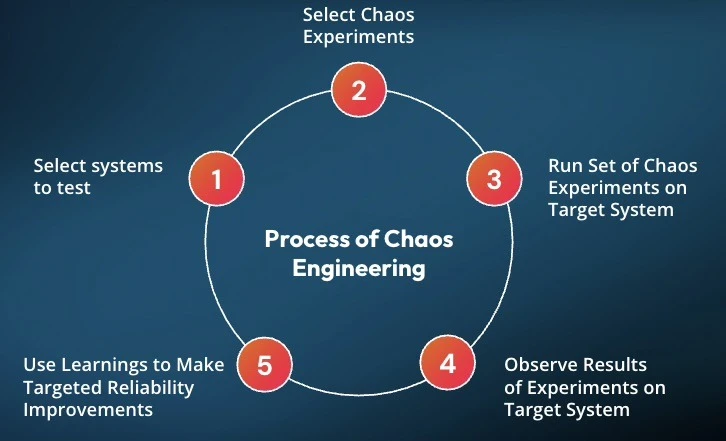
It is built on hypothesis-driven experimentation. Every test starts with a clear expectation: what should happen if this component fails?
Instead of breaking things randomly, teams run controlled experiments. For example, stopping one out of ten servers to observe how the system adapts. These scenarios are planned, reviewed, and executed with intention.
At Target, when Matt was working with engineering teams, they would learn something before running a test by getting the whole team aligned on the experiment's hypothesis. It would require teams to review their architecture diagrams, documentation, and runbooks, often revealing issues before a test was started.
The goal is not disruption. The goal is learning.
Today, teams are taking this further with AI, automatically identifying resilience risks and generating experiments before issues reach production.
Read how this works in practice: AI-Powered Resilience Testing with Harness MCP Server and Windsurf
Myth 2: It’s Only for FAANG Companies
Chaos engineering is often associated with Netflix, Google, and other hyperscalers. That makes it feel out of reach.
The Reality: You do not need massive scale to get meaningful value.
You can start small today.
A simple experiment, such as increasing memory utilization on a single service, can reveal whether your auto-scaling actually works. These small tests validate that the resilience mechanisms you are using will function when issues happen, rather than having your customers impacted.
What matters is not scale. What matters is consistency and learning how your system behaves under stress.
Myth 3: Chaos Engineering Replaces Traditional Testing
Some teams worry that adopting chaos engineering means replacing QA or existing testing workflows.
The Reality: Chaos engineering strengthens what you already do.
At Target, chaos experiments were layered into monthly load testing. While simulating peak traffic, failure scenarios such as payment authorization latency were introduced to observe system behavior under real pressure.
This approach does not replace testing. It makes it more realistic and more valuable.
Build Confidence, Not Chaos
Chaos engineering is not about breaking systems. It is about understanding them.
When teams move from ad hoc testing to small, continuous, hypothesis-driven experiments, they gain something far more valuable than test results. They gain confidence.
Confidence that their systems will behave as expected.
Confidence that failures will not become outages.
Confidence that they are ready for the unexpected.
See It in Action
If you are thinking about chaos engineering, the best way to understand it is to start.
Harness helps teams safely design, run, and learn from controlled chaos experiments without putting production at risk.
Want to try your first chaos engineering test? Sign up for your free Resilience Testing account today. Prefer a hands-on demo with an expert? Click here for a personalized demo.
