March 2026: Shipping Features to Close the AI Velocity Paradox

TL;DR
- AI acceleration without complexity: 55 features shipped in March 2026 close the AI velocity paradox by embedding intelligence at every stage of the delivery pipeline.
- Security scales with speed: AIDA now scans for OWASP LLM Top 10 vulnerabilities and prioritizes fixes using EPSS scoring, so teams ship secure AI apps without manual triage.
- Deployments stay reliable: Release Orchestration v2 gives teams fine-grained control over progressive rollouts, reducing deployment risk while maintaining velocity.
- Cost control becomes automatic: SMP cost anomaly detection flags budget overruns before they compound, and Terraform retry logic eliminates wasteful re-provisioning.
According to our AI Velocity Paradox report, many engineering teams say AI has made them ship code faster, but quality and security issues have exasperated across the SDLC. That gap is the whole story. AI coding assistants are compressing the time to write and commit code, but the bottlenecks have just moved downstream: into builds, security scans, deployment pipelines, incident response, and cost controls. In March, we shipped 55 features, most of them targeting exactly those downstream stages. This is what closed-loop AI velocity looks like.
AI Built Into Every Step
Harness MCP v2 (Early Preview)
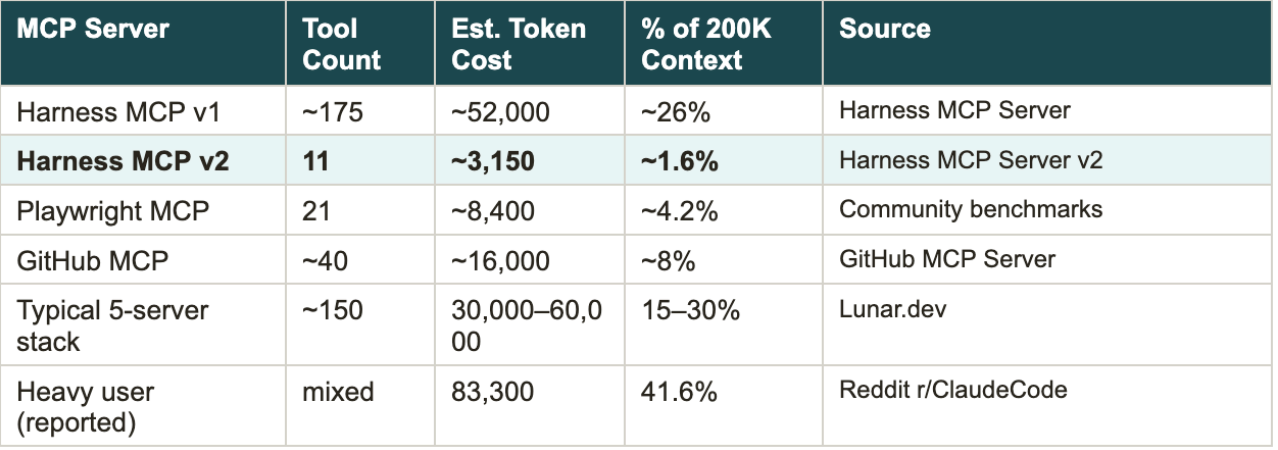
The next version of the Harness MCP server is rolling out to early access customers. It ships with 10 unified tools, CRUD and execute support across 119+ resource types, and 26 built-in prompt templates that chain tools together for multi-step workflows, debug a pipeline failure, deploy an app, review DORA metrics, and triage vulnerabilities. Install it in one command: npx harness-mcp-v2. No cloning, no local setup.
Learn more about how we redesigned our MCP server to be more agentic AI-friendly.
AI Skills for Your IDE
A new skills repository sits on top of MCP to let AI coding assistants, such as Claude Code, Cursor, and OpenAI Codex, act within Harness without the user needing to know Harness. Skills are structured instruction files. "Create a CI pipeline for my Node.js app" turns into the right tool calls automatically.
GitOps Troubleshooting via AI
The AI velocity paradox doesn't end at deployment. It continues into operations, especially in systems like GitOps, where small configuration issues can cascade quickly.
Harness AI now understands GitOps entities and can detect misconfigurations in manifests, identify missing dependencies or clusters, diagnose connectivity issues, and suggest fixes in context. With the expansion of the "Ask AI" assistant into GitOps, teams can troubleshoot issues directly where they occur, not after the fact.
Watch GitOps and Harness AI in action:
AI Chat: OPA Policy Enforcement on Generated Resources
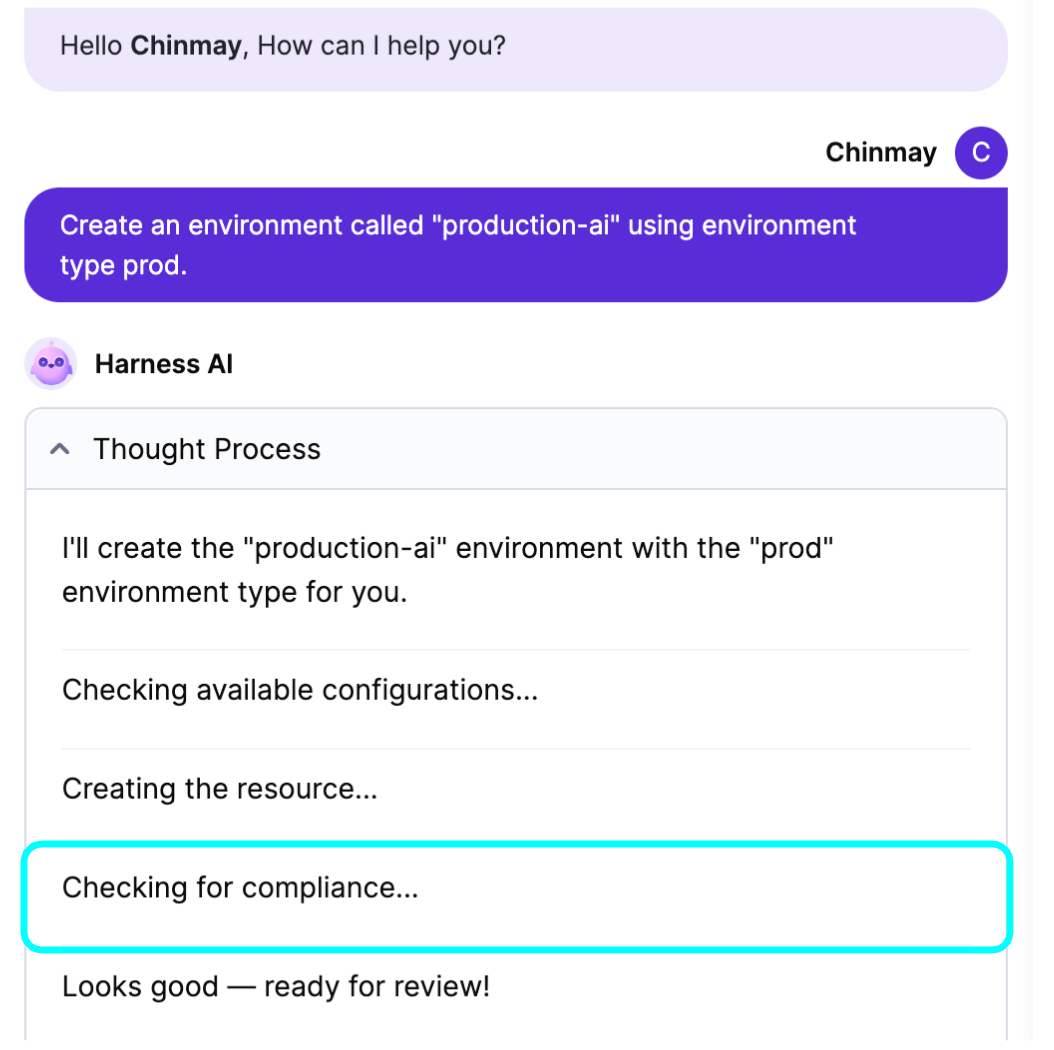
With Harness AI, users can now do much more around Open Policy Agent (OPA). AI-driven entity creation is now automatically evaluated against your organization's Open Policy Agent policies, so when the agent generates a Harness resource, it checks compliance in real time and surfaces validation messages directly in the chat. This means governance isn't a post-creation audit; it's baked into the moment of creation.
Security Baked Into the Pipeline
EPSS-Based Vulnerability Prioritization
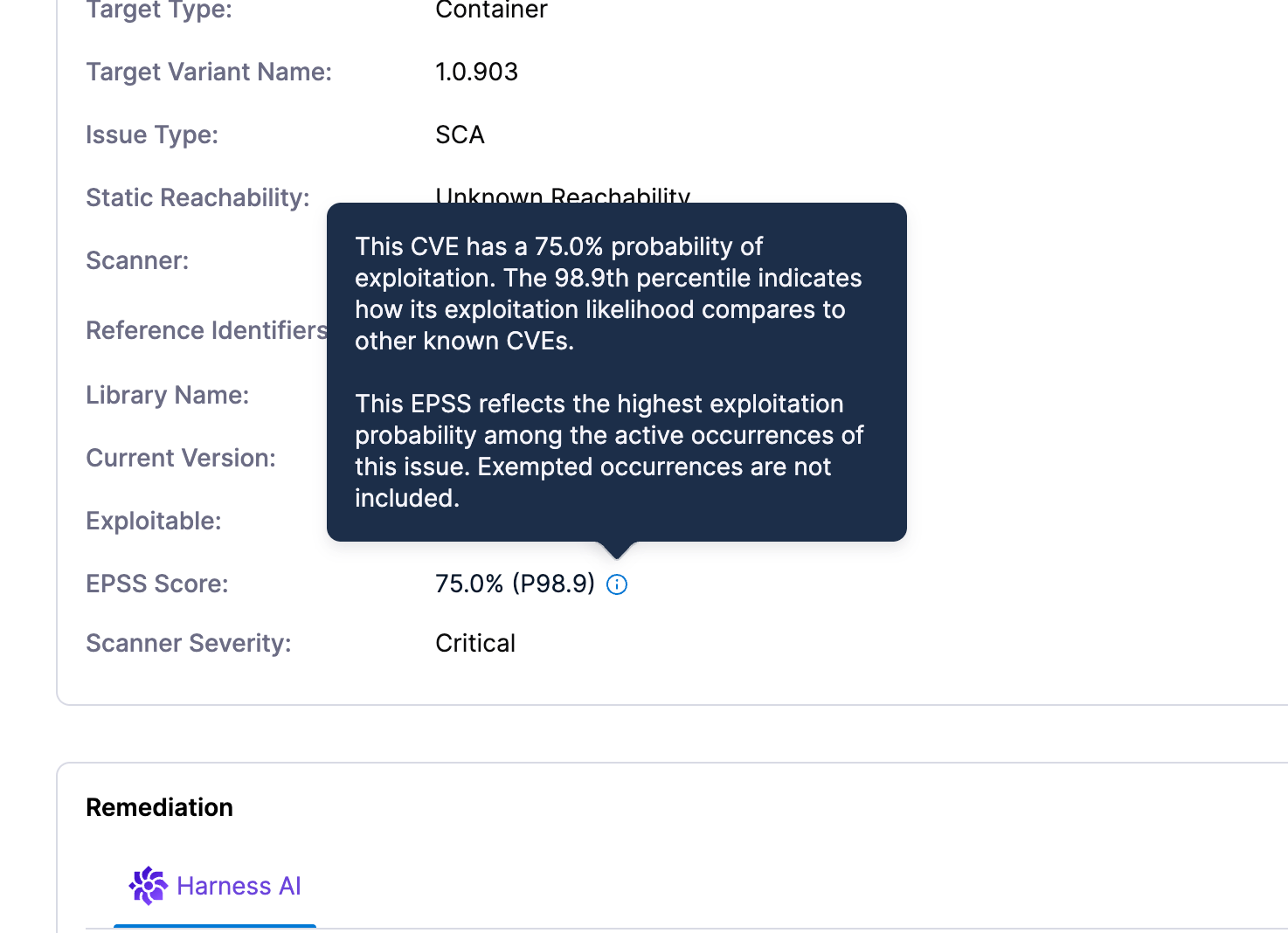
Vulnerability prioritization now includes EPSS (Exploit Prediction Scoring System) scores alongside CVSS severity. EPSS predicts the probability that a CVE will be exploited in the wild within 30 days. Teams can stop triaging by theoretical severity and focus on the vulnerabilities that attackers are actively targeting.
Manual Severity Override
Security teams can now adjust scanner-assigned severity levels when the tool's rating doesn't match real-world risk in their environment. Override the score, add context, and move on.
Full OSS Dependency Visibility
Supply Chain Security now covers both direct and transitive (indirect) open source dependencies in code repositories, with vulnerability intelligence from the Qwiet database. When a vulnerable child dependency is three layers deep, you can see exactly where it was introduced and trace the path to fix it.
AutoFix Directly in GitHub Pull Requests
A new GitHub App delivers AI-generated security fixes from Harness SAST and SCA scanning directly inside the GitHub PR workflow. Developers get automated fix suggestions and can have a back-and-forth conversation about the remediation without leaving GitHub.
AutoFix for Harness Code Repositories
The same AutoFix capability now works in Harness Code. SAST and SCA scans automatically open pull requests with AI-generated fixes, including plain-language explanations of what was changed and why.
Dependency Firewall
The Artifact Registry Dependency Firewall now ships with a full Harness CLI, letting developers audit dependencies for npm, Python, Maven, NuGet, and Go packages before they hit a build. Maven and Gradle plugins are included. In testing against a multi-module Maven project, artifact upload time improved 10x compared to standard flows.
AI Discovery for Your AI Ecosystem
Automatically discovers AI assets across models, APIs, and MCP servers in your environment. Provides deep visibility into prompts, responses, tool usage, and data flows, with continuous posture evaluation and centralized governance controls.
AI Firewall (Beta)
Runtime protection for AI applications: detects prompt injection, model misuse, unsafe outputs, and data leakage across multi-hop AI application flows with policy-driven enforcement.
DAST AI Testing (Beta)
DAST for LLM applications covering the OWASP LLM Top 10 vulnerability categories. Runs during development, before production.
Secure AI Coding in Cursor, Windsurf, and Claude (Beta)
Real-time security scanning now runs inside AI-native development environments. The existing IDE extension handles the integration; no new tooling is required.
Deploy Faster and More Reliably
Release Orchestration
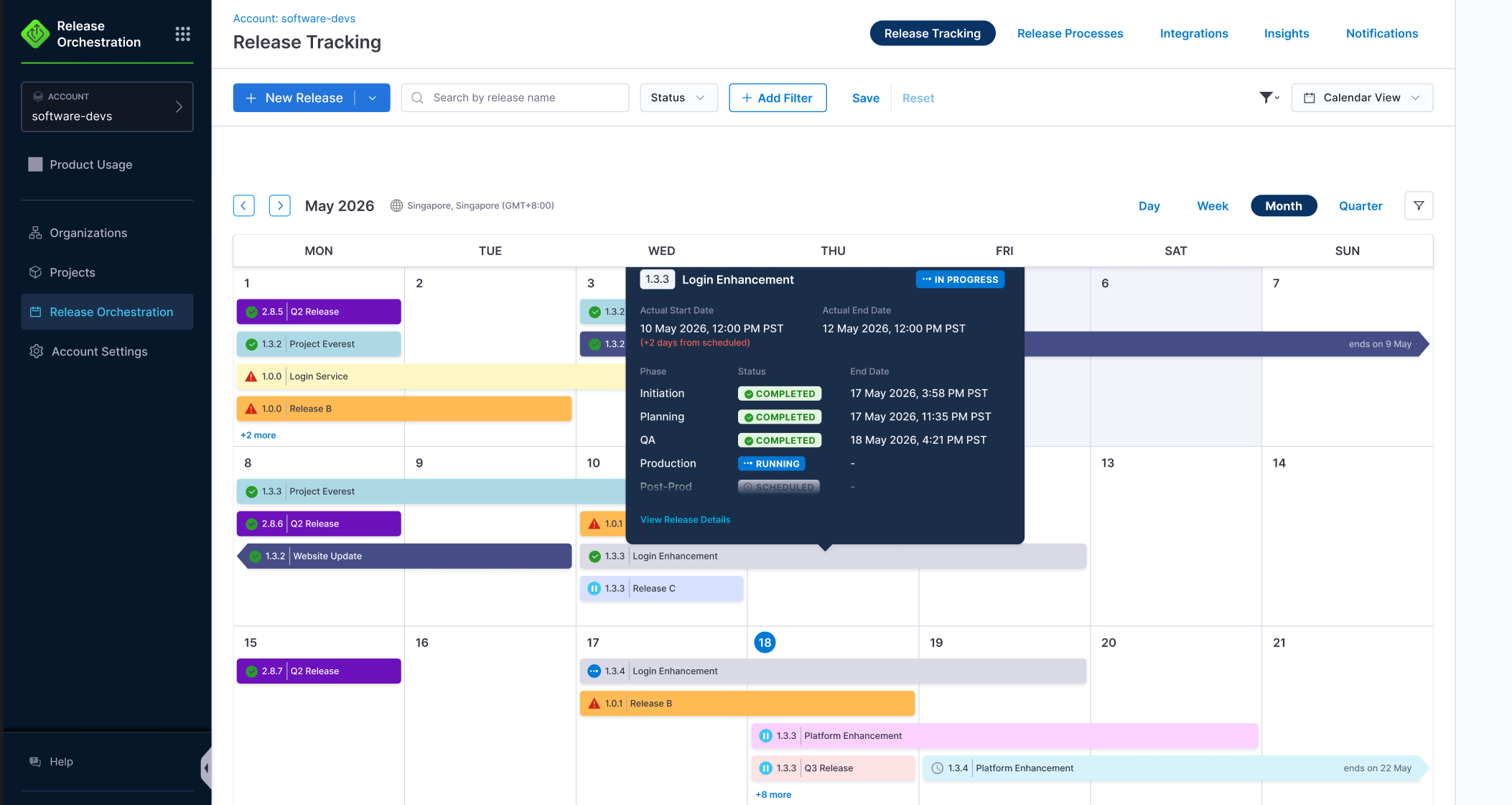
Release Orchestration replaces Slack threads, spreadsheets, and war-room calls that still coordinate most multi-team releases. Services and the teams supporting them move through shared orchestration logic with the same controls, gates, and sequence, so a release behaves like a system rather than a series of handoffs. And everything is seamlessly integrated with Harness Continuous Delivery, rather than in a separate tool.
Feature Flags as First-Class Pipeline Steps
14 out-of-the-box feature flag steps are now available in the step library: create flags, manage targets, set allocations, trigger kill switches. Combine them with approvals and manual gates to coordinate releases exactly when you want them to happen. This improved pipeline and policy support for feature flags and experimentation enables teams to deploy safely, and release progressively to the right users even though the number of releases is increasing due to AI-generated code. They can quickly measure impact on technical and business metrics, and stop or roll back when results are off track. All of this within a familiar Harness user interface they are already using for CI/CD.
Warehouse-Native Feature Management and Experimentation
Warehouse-Native Feature Management and Experimentation lets teams test features and measure business impact directly with data warehouses like Snowflake and Redshift, without ETL pipelines or shadow infrastructure. This way they can keep PII and behavioral data inside governed environments for compliance and security.
Feature Flag Archiving
Retire feature flags without deleting them. Archived flags stop being sent to SDKs and disappear from default views, but all historical data, impressions, configurations, and audit logs are preserved for compliance and analysis.
ECS Scale Step
Scale ECS services up or down without triggering a full deployment. This is a dedicated step; it doesn't touch your service definition or redeploy anything.
ECS Scheduled Actions
Define time-based auto-scaling policies for ECS services directly in Harness, using the new EcsScheduledActionDefinition manifest type.
Helm Values Overrides in Service Hooks
Native Helm deployments can now expose Harness values overrides to service hooks before Helm runs. Use this to decrypt override files (e.g., with SOPS) in a pre-run hook.
Host Groups for WinRM Deployments
Physical data center WinRM deployments can now assign independent credentials to different groups of hosts within a single infrastructure definition. Unblocks environments running Just Enough Administration (JEA) configurations where each server group has distinct endpoint settings.
Google Cloud Storage for MIG Manifests
Managed Instance Group deployments on GCP can now pull manifests and templates from Google Cloud Storage.
Pipeline Notifications for Approval Waits
Pipelines now send notifications the moment they pause for user input, such as approvals, manual interventions, or runtime inputs.
Faster Builds
CPU and Memory Metrics in Build Execution View
Build stages now display real-time CPU and memory usage directly in the execution view. Use it to right-size infrastructure and troubleshoot memory pressure before it causes failures.
Branch-Based Build Version Counters
Build numbers now track independently per branch. Teams running parallel branches no longer share a global counter.
Real-Time Step Status for Container Step Groups
Container-based step groups report step status in real time during execution rather than waiting for the group to complete.
Cache Intelligence: Azure Blob Storage
Build caches can now be stored and retrieved from Azure Blob Storage with principal authentication and OIDC-based access.
Cache Intelligence: Go Builds on Linux
Automatic dependency caching is now available for Go projects building on Linux.
Docker Proxy Auto-Detection
The Docker Build and Push plugins now automatically detect and pass HARNESS_HTTP_PROXY, HARNESS_HTTPS_PROXY, and HARNESS_NO_PROXY as Docker build arguments. No manual proxy configuration needed.
API and Runtime Security
Traceable Now Embedded in Harness
Traceable's API security capabilities, discovery, inventory, threat detection, and runtime protection are now accessible directly in the Harness UI as a native embedded experience, without switching tools or tabs.
Self-Service Bot and Abuse Protection Policies
Bot and abuse protection now supports self-serve policy templates. The Velocity/Aggregation template lets you write rules like "Flag all users who have logged in from more than 5 countries in the last 30 minutes" or "Flag bot IPs distributing attacks across more than 10 countries over 24 hours." Covers both fast-moving and slow distributed attack patterns.
Dynamic Payload Matching in Custom API Policies
Custom policies, such as signature, rate-limiting, DLP, enumeration, and exclusion, now support dynamic payload matching. Both sides of a comparison can reference live values from the request, response, or extracted attributes.
Incident Response, Upgraded
Native ServiceNow Actions in Runbooks
Runbooks can now create ServiceNow incidents, update records, and add comments natively, without custom webhook configuration. Fields pull dynamically from your ServiceNow instance. Previously, this required PagerDuty or OpsGenie to accomplish via custom integrations; it's now first-class.
Reusable Webhook Templates
Configure a webhook once, save it as a template, and reuse it across integrations. Templates are organization-scoped and use copy-on-write, i.e., changes don't propagate to existing webhooks.
Named Alert Rules
Alert rules now support custom display names. Identify and manage rules by name instead of opaque identifiers.
Active Pages View for On-Call
On-call users can now see all currently active pages from a single view: status, assigned responders, escalation progress, and acknowledgment state in one table.
Cloud Cost Visibility
Partial Savings Auto-Inference
The savings inference engine now detects partial infrastructure changes, not just fully realized ones. Track savings as they accumulate, not only after a recommendation is fully implemented.
AWS Cost Optimization Hub Integration
Recommendations now expand across all major AWS resource types. Moving from Cost Explorer Hub to Cost Optimization Hub, with AWS costs shown as net-amortized directly from the console.
Anomaly Whitelisting for Reserved Instances and Savings Plans
Whitelist expected RI/SP billing events, renewals, purchases, and adjustments, to reduce false-positive noise in anomaly detection.
Budgets Decoupled from Perspectives
Budgets no longer require a Perspective to exist first. They're now based on Cost Categories, making them importable into BI dashboards and usable in more governance contexts.
Cluster Orchestrator Savings Report
A read-only savings report shows projected savings before Cluster Orchestration is enabled and actual savings after. Understand the value before committing, then track realized results over time.
Node Pool Recommendations with Cloud Billing Tags
Node pool recommendations now surface AWS cost allocation and environment tags alongside Kubernetes node labels, giving recommendations more operational context.
Database Changes Without the Drama
Snowflake Support
Database DevOps, now with Snowflake support, brings schema changes into the same pipeline as application code, so the two move together through the same controls with the same auditability. If a rollback is needed, the application and database schema can rollback together seamlessly. This matters especially for teams building AI applications on warehouse data, where schema changes are increasingly frequent and consequential.
Online Schema Changes for MySQL with Percona Toolkit
Run online schema changes on MySQL with zero table locks. Enable it from the DB schema edit dialog.
Keyless Auth for Google Spanner
Authenticate to Cloud Spanner using Workload Identity, eliminating service account keys from Spanner deployments entirely.
Code Management
Repo Forking
Harness Code now supports repository forking. Developers can fork any repo, make changes, and open a pull request back to the upstream source, the same workflow as GitHub.
Git LFS Upload Performance
Large file uploads via Git LFS are faster. File content now streams during OID calculation instead of buffering in memory.
Automated Testing
On the testing/AI Test Automation side, updates focused on handling complexity at scale: better organization with nested test tasks, improved traceability with Jira integration, more flexible AI-driven test creation, and UX improvements for navigating large test suites. Because if AI increases the volume of changes, testing systems need to become more adaptive, not more manual.
Other Updates
- Platform: Proactive email alerts at 80%, 95%, and 100% of account resource limits (users, projects, connectors, secrets, roles) with up to 5 configurable recipients.
- Build logs now display the actual machine size name (e.g., medium) instead of the internal flex label.
- Chaos Engineering: Splunk Observability probe support, user-defined variables, load test integration, native Windows network chaos faults, Linux chaos faults (network, API, JVM, process, service, DNS, disk fill), and Disaster Recovery component support added.
- AI SRE documentation restructured into separate tracks for administrators and incident responders.
Conclusion
The throughput you see here, 55 features in 31 days, reflects what happens when the AI acceleration loop closes end to end. Teams writing code faster with AI agents need pipelines, security scans, deployments, and incident response to keep pace. That's the bet we're making: engineering velocity compounds when AI works across the entire delivery chain, not just the code-generation process. What's next? Look out for our April updates.